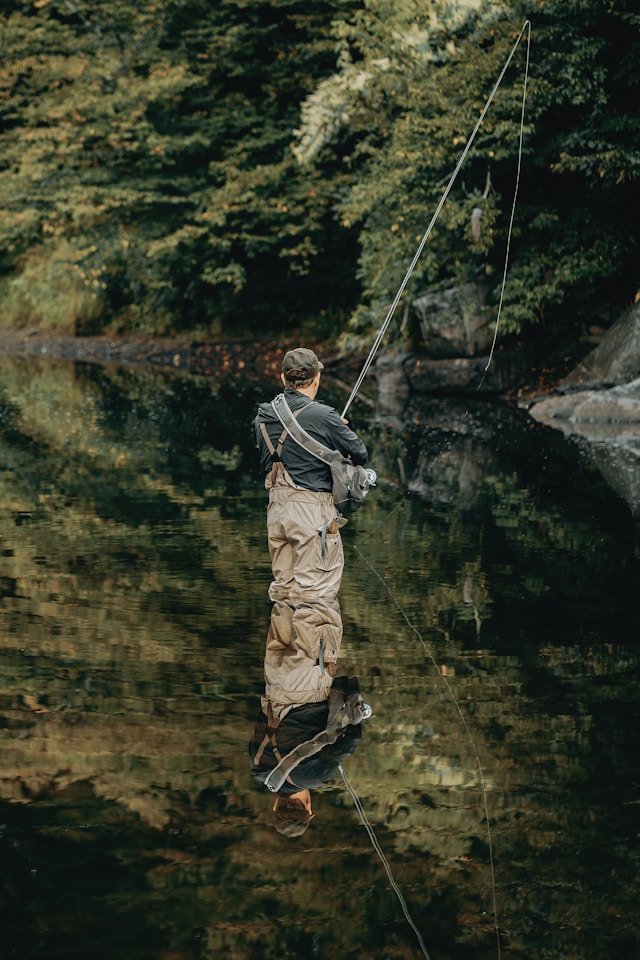
Maine is one of the premier fly fishing destinations in the eastern United States — a state where wild brook trout still hold in remote ponds accessible only by floatplane, landlocked salmon rise to dry flies on cold clear rivers, and the sheer quantity of unfished water rewards the angler willing to get off the beaten path. The combination of cold, clean water, low fishing pressure, and careful fisheries management makes Maine’s fly fishing genuinely exceptional by eastern standards.
Maine’s Fly Fishing Species
Brook Trout — Maine’s native salmonid and the fish that defines Maine fly fishing. Maine holds some of the last truly wild, self-sustaining brook trout populations in the eastern US — fish that have never seen a hatchery truck. The finest brook trout fishing is in remote North Maine Woods ponds, the Rangeley Lakes region, and the Jackman area.
Landlocked Salmon — Atlantic salmon isolated in inland lakes, retaining all the fighting qualities of their sea-run relatives. Best fishing coincides with smelt runs in spring (April-early May). Premier waters include the Kennebago River, Rapid River, Grand Lake Stream, and major tributaries of the Rangeley Lakes and Moosehead Lake.
Lake Trout (Togue) — Found in the deep, cold lakes of the north and west. Most productive in spring and fall when fish are in shallower water. Moosehead Lake, the Rangeley Lakes, and Sebago Lake are the primary togue fisheries.
Smallmouth Bass — World-class and significantly underrated. The Belgrade Lakes, the Penobscot River drainage, and numerous western Maine lakes hold dense populations that readily take poppers and streamers. Peak season is summer when trout fishing slows.
Striped Bass — Maine’s saltwater fly fishing anchor. Move into Maine coastal waters beginning in June through October. The Kennebec River estuary, Sheepscot River, Penobscot Bay, and the southern Maine coast all produce excellent striper fly fishing.
The Rangeley Lakes Region
The historic center of Maine fly fishing, with a tradition extending to the late 19th century. The Kennebago River — crown jewel of Rangeley-area fishing, remote and known for landlocked salmon and brook trout. The Rapid River — one of Maine’s most famous fly fishing rivers, fly fishing only, accessible by boat across Lower Richardson Lake. The Magalloway River — renowned for brook trout and salmon in remote country. Dozens of remote ponds hold wild brook trout, many accessible only by trail or floatplane.
The Jackman and North Maine Woods Region
Maine’s wildest fly fishing country — vast boreal forest and wetland with hundreds of remote ponds and streams at low fishing pressure. The Moose River is an excellent brook trout and salmon river with good access. Remote ponds by floatplane from Greenville or Jackman offer the most exceptional brook trout fishing in Maine — wild, unpressured fish that have rarely seen an artificial fly. See our Jackman Maine fishing guide and Greenville seaplane tours guide for more.
Grand Lake Stream
One of Maine’s most celebrated fly fishing destinations — a short, cold, clear river managed as a trophy landlocked salmon fishery with special regulations. Fly fishing only for much of its length. Landlocked salmon average larger than most Maine waters, with clear water ideal for sight fishing. Grand Lake Stream village is a traditional sporting camp community — staying in the village and hiring a local guide is the best approach.
Seasons and Timing
Spring (April-May): Peak season for landlocked salmon coinciding with the smelt run. Streamer fishing at its best. Early summer (June): Brook trout excellent before water temperatures rise. Dry fly fishing begins as aquatic insects hatch. Summer (July-August): Remote high-elevation ponds and shaded streams continue to fish well. Bass and striper fishing peak. Fall (September-October): Second peak of the season. Brook trout in brilliant fall spawning dress, salmon active, excellent dry fly fishing in Rangeley and Jackman.
Hiring a Maine Fly Fishing Guide
Maine’s wild and often remote fly fishing country rewards local knowledge. Registered Maine guides must be licensed by the Maine Department of Inland Fisheries and Wildlife. Find guides through the Maine Professional Guides Association (maineguides.org) or through sporting camps in the Rangeley, Jackman, Greenville, and Grand Lake Stream areas.
Gear and Tackle
Rods: A 9-foot 5-weight covers most Maine trout and salmon situations. 4-weight for small streams and dry fly fishing. 6-7 weight for salmon streamers and bass. 9-10 weight for striped bass. Flies: Classic Maine streamers for landlocked salmon — Gray Ghost, Nine Three, Black Ghost. Adams, Elk Hair Caddis, and nymphs for brook trout. Large Clousers and poppers for bass and stripers.
Maine Fishing License
A Maine fishing license is required for all anglers 16 and older fishing in inland waters. See our complete Maine fishing license guide for license types, where to buy, and regulation details.
Plan Your Fly Fishing Trip
Ready to fly fish Maine? Browse lodging in Rangeley and Jackman for the finest trout country, or Greenville for floatplane access to the remote North Maine Woods ponds. For more, see our Jackman Maine fishing guide and our Maine fishing guide.
📌 Fly fishing in the North Maine Woods? Read our complete North Maine Woods Road Permit guide — everything you need to know about accessing remote fishing ponds via the checkpoint system.
📌 Fly fishing on the Bow Trip. Read our complete Moose River Bow Trip guide — the remote ponds and river sections hold wild brook trout with virtually no fishing pressure.
📌 Fly fishing at a Maine sporting camp. Read our complete Maine Sporting Camps guide — what to expect, notable camps, and how to book.
MaineGuide.com has been helping visitors plan their Maine trips since 1995.