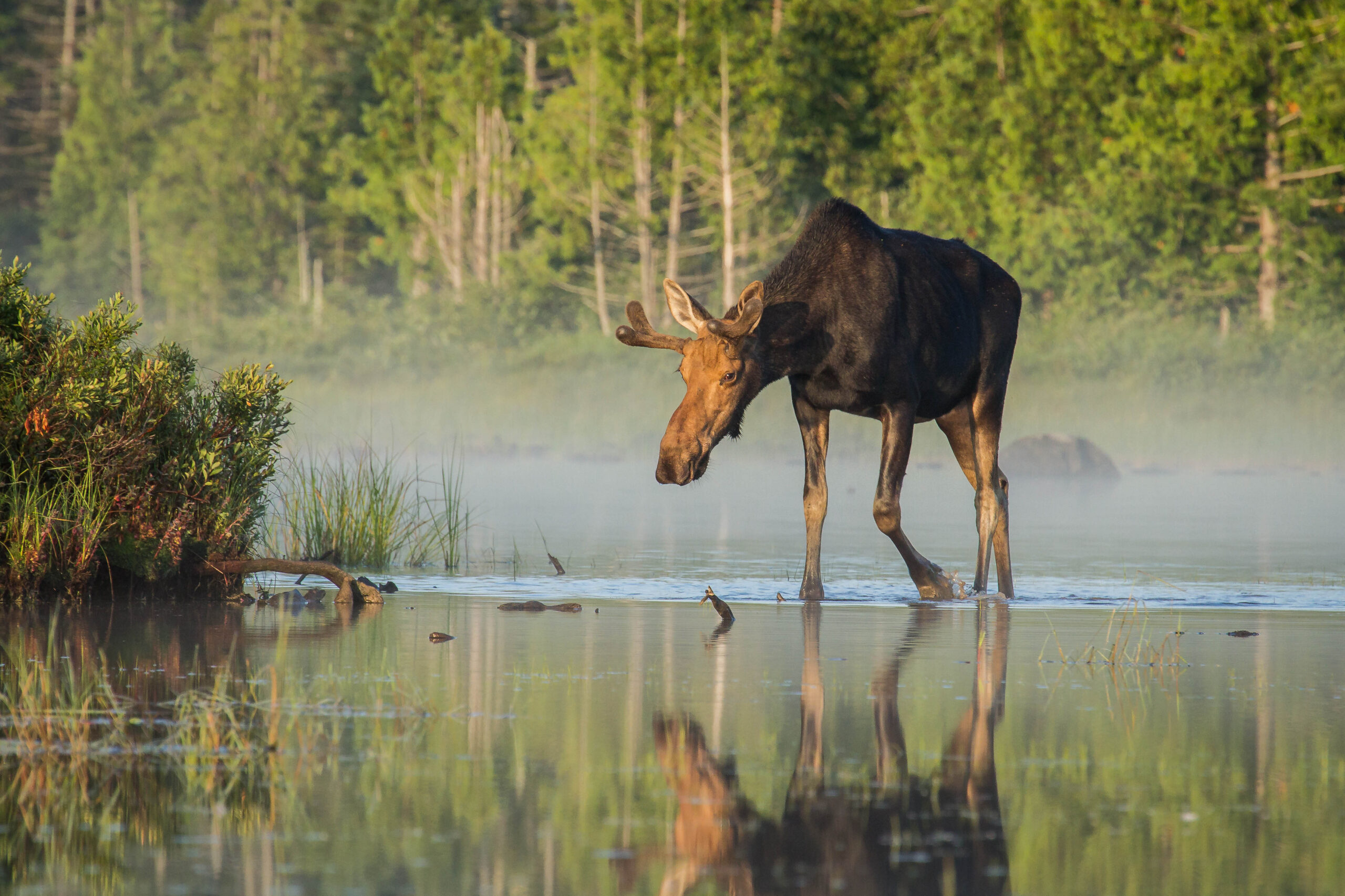
If you want to see a moose in Maine — and most visitors do — Greenville and the Moosehead Lake region is where you go. The area consistently produces the highest moose densities and the most reliable sightings of anywhere in the state. The combination of extensive wetland habitat, low human traffic, and the convergence of major river systems creates conditions that support a very large moose population in a relatively accessible area.
A moose sighting in Greenville isn’t a lucky accident — it’s almost a certainty if you’re in the right places at the right times.
Why Greenville is Maine’s Best Moose Watching Destination
Maine has the highest moose population of any state in the lower 48, with an estimated 60,000-75,000 animals. The Moosehead Lake region offers something remote areas don’t — accessibility. The logging roads, wetlands, and highways around Greenville put visitors within easy reach of prime moose habitat without requiring a backcountry expedition.
The Best Moose Watching Spots Near Greenville
Lazy Tom Bog — The single most reliable moose watching location in the Moosehead region and arguably in all of Maine. Located near Rockwood on the western shore of the lake, this expansive wetland regularly hosts multiple moose simultaneously — a cow with calves, a bull working the bog edges, sometimes three or four animals visible at once. Dawn and dusk are prime times.
Route 6/15 North of Greenville — The highway corridor north from Greenville toward Rockwood passes through prime moose country. Drive slowly at dawn and dusk — moose regularly cross the road and feed in the ditches and wetlands along the corridor.
The Moose River — The Moose River draining into the northern end of Moosehead Lake winds through wetlands and alder thickets that moose favor. Paddling by canoe or kayak puts you at water level moving quietly through moose territory — the best possible conditions for a close encounter.
Moosehead Lake Coves — Moose regularly wade into the shallow coves along Moosehead’s shoreline to feed on aquatic vegetation during summer, particularly in early morning. A boat or canoe allows quiet approach. The coves near the lake’s northern end and along the western shore toward Rockwood are particularly productive.
Logging Roads East of Greenville — The network of logging roads accessible from Greenville (with a North Maine Woods day use fee) penetrates some of the highest-density moose country in Maine. Early morning drives during June and July can produce multiple sightings within a few miles.
When to Watch for Moose
June and July — Peak moose watching season. Cows are accompanied by calves. Longer daylight hours mean more time in the prime dawn and dusk windows. Aquatic feeding in lake coves and rivers peaks in June and July.
September and October — The rut brings bulls into the open. Bull moose in September and October are driven by breeding behavior and less cautious than at other times — large antlered bulls are more commonly seen during the rut than any other period.
August — Still excellent, though moose begin moving into more forested areas as temperatures rise. Water feeding continues at lower intensity.
Winter — Moose are present year-round but harder to find in winter as they move into denser forest for cover. Deep snow years can concentrate moose along plowed roads.
Guided Moose Tours
Several outfitters in the Greenville area offer guided moose watching tours — vehicle-based excursions that take visitors to the most reliable current sighting locations with a local guide who knows the landscape intimately. Northwoods Outfitters in Greenville is one of the most established operators. Ask at the Greenville Chamber of Commerce for current guide recommendations.
How to Watch Moose Safely
- Stay in or near your vehicle — a vehicle provides safety and a non-threatening presence moose often tolerate at closer range than a person on foot
- Never approach a cow with calves — cow moose with calves are the most dangerous encounter and will charge without warning
- Watch for signs of stress — raised hackles, laid-back ears, or movement toward you means back away slowly
- Use binoculars — the best moose watching doesn’t require getting close
- Never feed moose — feeding wildlife is illegal in Maine
Photography Tips
A 300-400mm telephoto lens allows excellent detail shots from a safe distance. The golden hour after sunrise and before sunset provides the best light. Position yourself at a known feeding area before dawn and wait — patience is the most important skill in wildlife photography. For vehicle-based watching, a window mount stabilizes longer lenses effectively.
Where to Stay
Greenville and Rockwood offer a range of lodging from Blair Hill Inn to traditional sporting camps and lakeside cottages. Staying multiple nights increases your chances dramatically — moose watching improves with local knowledge that develops over successive mornings. Browse our Moosehead Lake lodging guide for the full list.
Plan Your Trip
Ready to watch moose at Moosehead Lake? Browse Moosehead Lake lodging and plan your visit. For more on the Moosehead region, see our complete guide to Things to Do at Moosehead Lake Maine. For moose watching across Maine, see our Maine moose watching guide. Deciding between Moosehead and Jackman? Read our Jackman vs Moosehead Lake comparison.
MaineGuide.com has been helping visitors plan their Maine trips since 1995.
📌 Want to spot moose from the air? Read our guide to Greenville Maine Seaplane Tours — floatplane tours over Moosehead Lake and the surrounding wilderness.