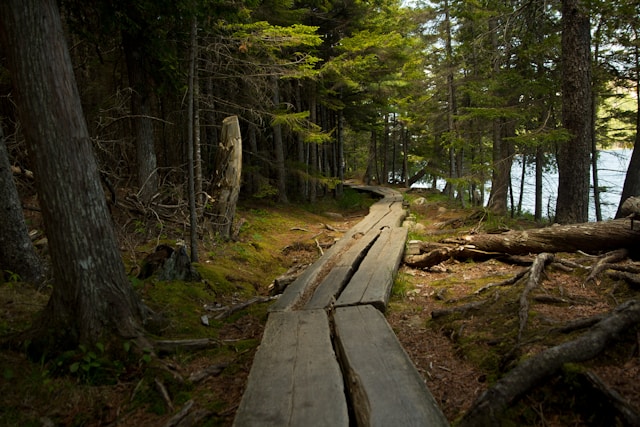
Acadia gets better every time you visit — and worse if you visit at the wrong time. We’ve been sending visitors to the park for three decades and our single most consistent piece of advice is the same now as it was in 1995: go in September. Acadia National Park is the most visited national park in New England and one of the most visited in the United States. The park protects 47,000 acres of rugged coastline, granite mountains, forested interior, and freshwater lakes on Mount Desert Island and several smaller islands off the Maine coast. It’s the only national park in the northeastern United States where mountains meet the sea.
The Basics
Entrance fee: $35 per vehicle (valid 7 consecutive days), $20 per person on foot or bicycle. The America the Beautiful annual pass ($80) covers all national parks for one year. Main visitor center: Hulls Cove Visitor Center on Route 3 just north of Bar Harbor — start here for maps and trip planning. Open May through October.
When to Visit
Peak season (July-August): Full services but significant crowds. Parking lots fill by 9am. Cadillac Mountain timed entry required. Shoulder season (June and September): Strongly recommended — September offers the clearest air, warmest ocean temperatures, and significantly lower crowds. Fall foliage (October): Spectacular, typically peaking the second week of October. Off-season: Park open year-round; most facilities closed but excellent for snowshoeing and dramatic winter coastal scenery.
See our best time to visit Bar Harbor guide for more on seasonal conditions.
Getting Around
The Island Explorer — the free bus system connecting Bar Harbor to major park destinations is the single best way to experience Acadia. No parking stress, frequent service, comprehensive coverage. Runs late June through Columbus Day. Download the route map before you arrive.
Cadillac Summit Road requires a timed entry reservation (May 22–October 22) — book at recreation.gov well in advance. Biking the 45-mile carriage road network is ideal — car-free, well-maintained, and beautiful. Bike rentals available in Bar Harbor.
The Park Loop Road
The 27-mile Park Loop Road accesses the park’s eastern highlights: Thunder Hole (best at mid-tide with swell), Sand Beach (Acadia’s only sand beach, cold but swimmable), Otter Cliffs (dramatic 60-foot granite cliffs dropping into the Atlantic), and Jordan Pond (pristine mountain lake with views of The Bubbles — the Jordan Pond House serves the famous Acadia popovers on the lawn).
Cadillac Mountain
At 1,530 feet, Cadillac Mountain is the highest point on the US Atlantic coast, offering 360-degree views across Frenchman Bay, Bar Harbor, and the surrounding mountains and ocean. From mid-October through early March it’s the first place in the US to see sunrise each day. Timed entry reservation required during peak season — book at recreation.gov.
Best Hikes in Acadia
Easy: Jordan Pond Path (3.3 miles, flat), Bar Island (low tide only — check tide tables), Ship Harbor Trail (1.3 miles with tidal pools).
Moderate: Acadia Mountain (2.5 miles, finest views of Somes Sound), Flying Mountain (1.5 miles, views of the fjord), Beech Mountain (fire tower summit, quieter than Cadillac).
Strenuous: The Beehive (1.6 miles, iron rungs on cliff face — not for acrophobes), Precipice Trail (similar character, closed seasonally for falcon nesting), Penobscot and Sargent Mountains (4+ miles of open ridge terrain).
The Carriage Roads
45 miles of broken-stone roads built by John D. Rockefeller Jr. between 1913 and 1940 — car-free, suitable for walking, cycling, and cross-country skiing. Seventeen historic stone bridges carry the roads over streams and under park roads. The Eagle Lake loop (6 miles) and the Jordan Pond to Eagle Lake connector are the finest cycling routes.
The Schoodic Peninsula
The mainland section of Acadia — about an hour from Bar Harbor, significantly less crowded than the main island. A one-way scenic road around the peninsula accesses dramatic rocky coastline and Schoodic Point, where open Atlantic swells arrive without barrier. Accessible by seasonal ferry from Bar Harbor or by car via Route 186.
Isle au Haut
The most remote section of Acadia — a small island accessible only by mail boat from Stonington, 15 miles southwest. About 2,700 acres of national park land with a primitive trail network and lean-to campsites (reservable at recreation.gov). A day trip for serious hikers — dramatic coastal headlands, no services, low visitor numbers. The finest day in Acadia for wilderness lovers.
Camping in Acadia
Blackwoods Campground — 281 sites near Bar Harbor, open year-round, closest to the ocean drive. Seawall Campground — 200 sites on the quieter western side. Schoodic Woods — 94 sites on the Schoodic Peninsula. All extremely popular — July and August reservations open in January and fill within hours at recreation.gov.
Practical Tips
- Book Cadillac Mountain timed entry and campsites at recreation.gov as far in advance as possible
- Use the Island Explorer — it’s free and eliminates the parking problem entirely
- Bring water — limited potable sources on trails
- Always bring a layer and rain gear — Acadia weather is highly variable, fog is common
- Stay on marked trails and pack out all waste
Plan Your Trip
Ready to visit Acadia? Browse Bar Harbor lodging to find your base camp. For more on the area, see our guide to Things to Do in Bar Harbor with Kids, our Best Time to Visit Bar Harbor guide, our Bar Harbor Restaurants guide, and our Camden vs Bar Harbor comparison.
About MaineGuide.com: MaineGuide.com has been helping visitors plan their Maine trips since 1995 — making us one of the longest-running and most comprehensive Maine travel resources on the web. Our guides are built on decades of firsthand Maine knowledge, local expertise, and a genuine love for the state.
📌 No car? No problem. Read our Getting to Bar Harbor Without a Car guide — Concord Coach Lines, the free Island Explorer, and everything you need for a car-free Acadia visit.
📌 Planning a Maine road trip ending at Acadia? Read our complete One Week Maine Road Trip Itinerary for the full Portland to Bar Harbor route.
Acadia National Park FAQ
What is the entrance fee for Acadia National Park?
As of 2026, the Acadia entrance fee is $35 per vehicle, valid for 7 days. An America the Beautiful annual pass ($80 for US residents) also covers entry. Note that driving Cadillac Summit Road additionally requires a separate vehicle reservation, booked in advance through Recreation.gov.
Do you need a reservation for Cadillac Mountain?
Yes — to drive up Cadillac Summit Road, a vehicle reservation is required from May 20 through October 25, 2026, booked in advance at Recreation.gov (separate from the park entrance fee). You do NOT need a reservation if you hike, bike, or take a taxi to the summit. Sunrise reservations sell out fast, so book weeks ahead.
What are the best things to do in Acadia National Park?
Top experiences include driving the 27-mile Park Loop Road, watching sunrise from Cadillac Mountain (the first place in the US to see it in certain months), biking the 45 miles of car-free carriage roads, hiking to Jordan Pond and enjoying popovers at Jordan Pond House, seeing Thunder Hole (best 1-2 hours before high tide), and walking Sand Beach and the Ocean Path.