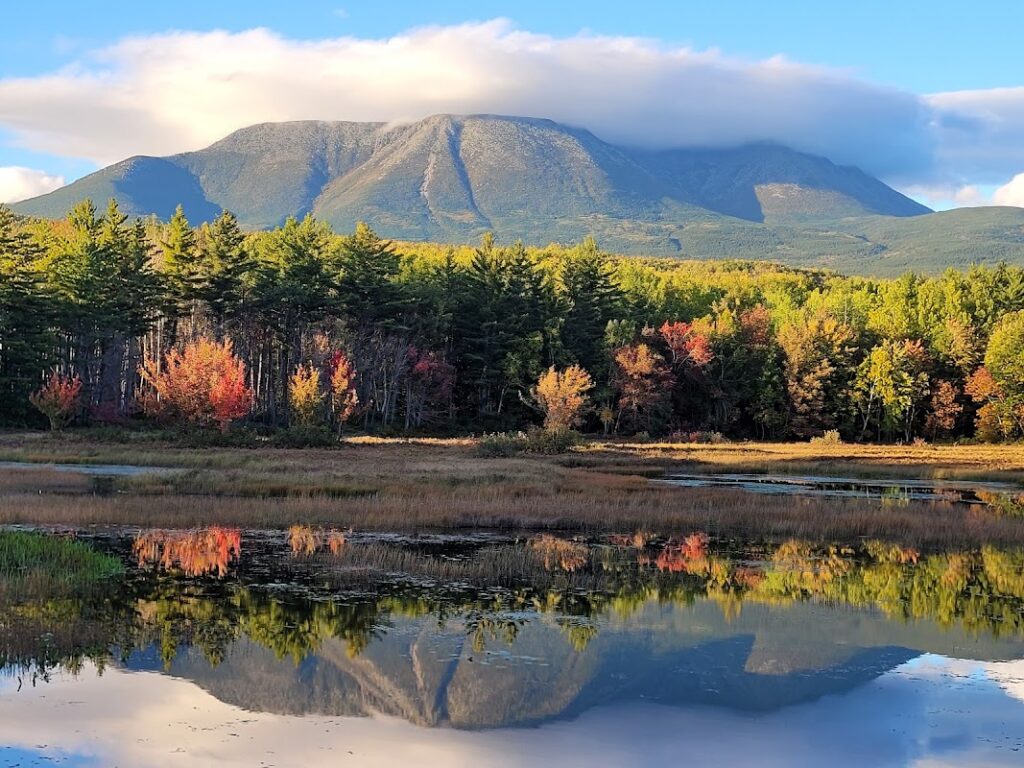
Baxter State Park is Maine’s great northern wilderness — 209,644 acres of forest, ponds, and rugged mountains crowned by Mount Katahdin, the state’s highest peak and the northern end of the Appalachian Trail. After three decades covering Maine, here is an honest, practical guide to visiting Baxter: how it works, how to get in, and what to know before you go.
Baxter State Park surrounds Mount Katahdin (5,267 feet) in north-central Maine and is famous for wilderness hiking, camping, and the summit of the Appalachian Trail. It is reservation-based, has no services of any kind, and — despite its name — is not a Maine state park but an independently governed “forever wild” preserve. Here is everything you need to plan a trip.
What Makes Baxter Different
Baxter is unlike any other park in Maine — or the country. It was a personal gift to the people of Maine from former Governor Percival P. Baxter, who bought the land piece by piece between 1931 and 1962 and placed it under a “forever wild” mandate. As a result, it is not part of the Maine state park system; it is governed independently by the Baxter State Park Authority, funded largely by Baxter’s own endowment, and deliberately kept primitive. That means no cell service, no electricity, no stores, no potable water, and no trash cans anywhere in the park. You carry in everything you need and carry out everything you bring. The park accepts cash only, and pets are not allowed. This is genuine backcountry — plan accordingly.
Getting In: Fees and Passes
Gate fee: entry is free for Maine residents; non-residents pay $20 per vehicle per day, or $50 for a season pass. Katahdin Trailhead Pass (KTP): if you are day-hiking Katahdin, you need a $10 per-vehicle parking reservation at one of the three Katahdin trailheads — Roaring Brook, Abol, or Katahdin Stream. The KTP is required June through October (not needed in May), and day-hikers are limited to two trailhead reservations per calendar month. Note you need a KTP to park at those lots even if you are hiking a nearby non-Katahdin trail like the Owl or South Turner. Reserve KTPs online starting April 1 for any summer date.
Camping and Reservations
All camping requires an advance reservation — Baxter takes no walk-ins. The park has about 337 campsites across 10 roadside campgrounds plus roughly 30 remote backcountry lean-tos and tent sites. Reservations use a rolling four-month window: a date becomes bookable exactly four months ahead when the online portal opens at 6:00 AM Eastern. Peak summer sites (July and August), especially at the Katahdin-base campgrounds like Roaring Brook and Katahdin Stream, often fill within minutes of opening. Campsite fees run from about $10 (the Birches) to $38, with group sites $60. The season runs roughly May 15 to October 15, with some campgrounds open to October 22. A useful tip: hold a campground reservation and you can hike Katahdin during your stay without a separate trailhead pass.
Hiking Katahdin
Climbing Katahdin is why most people come. At 5,267 feet it is Maine’s highest mountain and the northern terminus of the 2,190-mile Appalachian Trail, whose final stretch here is the Hunt Trail — 5.2 miles one way from Katahdin Stream Campground with over 4,000 feet of elevation gain, including the exposed, boulder-strewn ridge and the famous Knife Edge on the harder routes. Plan on a strenuous 8-to-12-hour round trip. Other approaches include the Abol Trail and the routes from Roaring Brook (Chimney Pond, Cathedral, Saddle). This is a serious, above-treeline climb with fast-changing weather — check conditions with a ranger before you start, and turn back if the forecast turns.
Beyond Katahdin
Baxter is far more than one mountain. Its 215 miles of trails reach dozens of other peaks (Doubletop, the Brothers, the Traveler) and quiet ponds, and most trailheads other than the Katahdin ones require no parking pass, so they stay far less crowded. The northern half of the park around Matagamon and the remote ponds offers solitude, paddling, wildlife (including moose), and fall foliage with a fraction of the Katahdin crowds. If your goal is wilderness rather than the summit checkbox, the rest of Baxter rewards you.
Where to Stay and Base Yourself
Millinocket is the gateway town, about 20 minutes from the Togue Pond (south) gate, with motels, outfitters, restaurants, and the last reliable supplies, gas, and cell service before the park. Many visitors camp inside Baxter; others base in Millinocket and day-trip in. Either way, arrive early — the Katahdin trailhead lots close once full, and campground gates lock at 8:30 PM. See our Millinocket guide for lodging and services, and our Katahdin Woods and Waters guide for the adjacent national monument.
Best Time to Go
July and August are peak — best weather, hardest reservations. September is the sweet spot: better availability, fewer crowds, cooler hiking, and early fall foliage. May and early June bring black flies, lingering snow up high, and Katahdin is often not climbable until late spring. October is beautiful but colder with a shortening season. For most visitors, early-to-mid September is the ideal window.
Baxter State Park: FAQ
Do you need a reservation for Baxter State Park?
Yes for camping (always, no walk-ins) and for day-hiking Katahdin, which requires a $10 Katahdin Trailhead Pass June through October. General day entry doesn’t require a reservation, but Katahdin trailhead parking lots close once full, and non-residents pay a $20 per-vehicle gate fee. Peak-summer camping and trailhead passes fill within minutes of opening four months ahead.
How much does it cost to visit Baxter State Park?
Maine residents enter free; non-residents pay $20 per vehicle per day or $50 for a season pass. A Katahdin Trailhead Pass is $10 per vehicle for day-hikers. Camping runs about $10 to $38 per site ($60 for groups). The park is cash-only with no ATMs.
Is Baxter State Park actually a state park?
No, despite the name. Baxter was donated by Governor Percival Baxter and is governed independently by the Baxter State Park Authority under a “forever wild” mandate, separate from the Maine state park system. That is why it is kept deliberately primitive, with no services, no electricity, and no cell coverage anywhere in the park.
How hard is it to climb Katahdin?
Very challenging. Katahdin is a strenuous 8-to-12-hour round trip with over 4,000 feet of elevation gain, exposed above-treeline terrain, and notoriously fierce, fast-changing weather. It is not a beginner hike. Start early, carry layers and plenty of water, check conditions with a ranger, and be willing to turn back.
See also our best hikes in Maine, best state parks in Maine, and Millinocket guide. MaineGuide.com has been Maine’s resource guide since 1995.