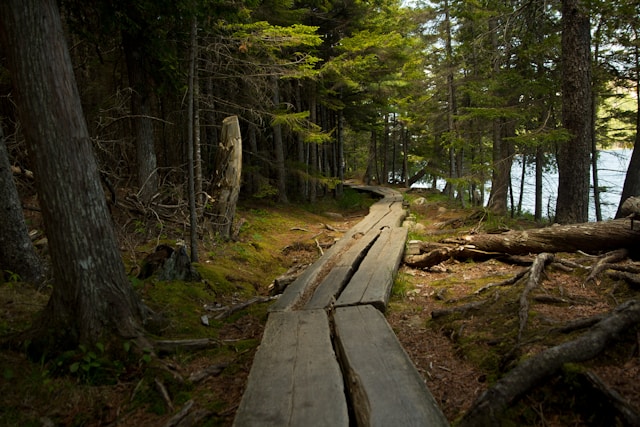
Maine has two major parks worth a destination trip — Acadia National Park on the coast and Baxter State Park in the North Woods — and in our experience, travelers who don’t understand the difference often book the wrong one. They share similarly stunning scenery, but the experience of visiting each is dramatically different. Acadia is accessible, well-developed, and crowded; Baxter is remote, primitive, and strictly limited. Choosing between them depends entirely on what kind of outdoor trip you actually want — and on whether you have the experience for the trip you think you want.
The Fundamental Difference
Acadia National Park is one of the most-visited national parks in the United States — over 4 million visitors a year. It has paved scenic roads, a free shuttle bus, dozens of restaurants in nearby Bar Harbor, multiple visitor centers, and well-maintained trails ranging from accessible boardwalks to challenging iron-rung climbs.
Baxter State Park is the opposite. It was donated to the people of Maine by former Governor Percival Baxter with strict conditions: it must remain “forever wild.” There is no cell service, no commercial services inside the park, no paved interior roads, and a daily entry quota that often fills before noon in summer. Reservations for camping must be made months in advance. There are no hotels.
Hiking Compared
Acadia: 158 miles of trails ranging from level paved paths to vertical cliff scrambles. Cadillac Mountain (the highest point on the U.S. eastern seaboard accessible by car) can be summited by a 7-mile drive or a 4-mile hike. Iconic shorter hikes include the Beehive (with iron rungs) and Jordan Pond Loop. The park is well-marked, frequently traveled, and easy to navigate without prior experience.
Baxter: 215 miles of trails, anchored by Mount Katahdin — the northern terminus of the Appalachian Trail and Maine’s highest peak at 5,269 feet. Climbing Katahdin is a serious all-day undertaking with significant exposure, weather risk, and elevation gain (over 4,000 feet on most routes). Other peaks like Doubletop, North Brother, and the Owl require equally serious commitment. Trails are marked but rough; backcountry navigation skills are useful.
Crowds
Acadia: Very crowded in July and August. Cadillac Mountain summit access requires a vehicle reservation (released 90 days in advance). Popular parking lots fill by 8 AM. The Island Explorer shuttle helps but doesn’t eliminate the crowds.
Baxter: Strictly limited. Each entry gate has a daily vehicle quota; once full, no one else gets in that day. Reservations for camping fill the day they open (early January for the upcoming summer). On busy summer weekends, the trailhead lots for Katahdin require pre-dawn arrival. Despite these limits, Baxter never feels crowded once you’re inside — the quotas exist to prevent the wilderness experience from being eroded.
Lodging and Logistics
Acadia: Bar Harbor and surrounding towns offer hundreds of inns, B&Bs, hotels, and short-term rentals. Restaurants, gas stations, and outfitters are everywhere. You can fly into Bangor and rent a car for a comfortable car-camping or hotel-based trip. The park itself has three campgrounds (reservations required in summer).
Baxter: No hotels inside or near the park. Lodging means either camping inside Baxter (lean-tos, tent sites, or bunkhouses, all reserved months ahead) or staying in Millinocket — a former mill town about 18 miles south of the park’s southern entrance. Millinocket has a few motels, several B&Bs, and basic services. Plan to bring everything you need.
Best Time to Visit
Acadia: Late spring through October. Summer is busy but everything is open. Late September into early October offers fall foliage with somewhat thinner crowds. The park is largely closed in winter, though some trails remain accessible for snowshoeing.
Baxter: Mid-May through mid-October for hiking and camping. The road through the park is gated in winter and the interior becomes accessible only by ski or snowshoe. Mosquitoes and black flies are intense in June; July and August are the most reliable months for hiking. Fall foliage in late September is exceptional but unpredictable weather can close trails.
Difficulty and Experience Required
Acadia is suitable for travelers of all experience levels. Many visitors do scenic drives and short hikes without ever needing significant outdoor skills. Even challenging Acadia hikes have well-defined trails and quick rescue access.
Baxter rewards experience and preparation. Katahdin specifically should not be a first-time hiker’s objective. Weather can deteriorate rapidly; rescues are slow due to remoteness. A trip to Baxter requires planning for self-sufficiency in a way that Acadia does not.
Who Should Pick Acadia
Choose Acadia if you want a scenic park with good infrastructure, comfortable lodging, restaurants, and accessible activities for travelers of all fitness levels. Best for first-time Maine visitors, families with children, and anyone who wants outdoor scenery without primitive conditions.
Who Should Pick Baxter
Choose Baxter if you’re an experienced hiker or backpacker seeking a true wilderness experience without crowds. It’s the right choice for ambitious peak-bagging trips, backcountry camping, and travelers who value solitude over convenience.
Combining Both
The two parks are about 3 hours apart by car and a combined trip is feasible — Acadia for a few days of scenic exploration, then drive north for a wilder Baxter experience (or vice versa). For broader Maine outdoor planning, see our destinations directory or our guide to North Woods & Moosehead.
Our Honest Take
The pattern we’ve seen with readers over the years: travelers who romanticize “Maine wilderness” often book Baxter expecting Acadia-with-fewer-crowds, then discover they’ve booked into something genuinely remote with no cell service, no restaurants, no quick way out if weather turns. Baxter is wonderful for the right traveler. It’s harder than Acadia in ways most first-time visitors don’t anticipate. If you’re not certain you want primitive conditions, Acadia is almost always the better call.
Where to Stay — Bar Harbor (Acadia) and Millinocket (Baxter)
Acadia has the widest lodging range on Mount Desert Island — book 4-6 months ahead for summer. Baxter area lodging centers on Millinocket — more available but book ahead for peak hiking season.
For vacation rentals and cottages, see MaineVacationRentals.com.
Acadia vs Baxter State Park FAQ
How far is Acadia from Baxter State Park?
Acadia National Park and Baxter State Park are about 180 miles apart — roughly a 3.5-hour drive. Acadia is on the Downeast coast; Baxter is deep in the North Woods interior, so most visitors treat them as separate trips.
Which is better, Acadia or Baxter State Park?
Acadia is Maine’s famous coastal national park — dramatic ocean scenery, carriage roads, the Park Loop Road, and the amenities of nearby Bar Harbor, but big crowds in summer. Baxter is a vast, rugged wilderness state park centered on Mount Katahdin, with primitive camping, serious hiking, no development, and strict day-use limits. Choose Acadia for accessible coastal beauty; Baxter for remote wilderness and Katahdin.