Ice fishing is woven into the fabric of Maine winter life in a way that outsiders rarely appreciate until they experience it firsthand. From the elaborate bobhouse villages that appear on Moosehead Lake each winter to the simple pleasure of jigging for smelt through a hand-drilled hole on a frozen pond, ice fishing in Maine is both a serious sport and a deeply social tradition. This guide covers the rules, the ice-safety basics, the fish, the best regions, and what to bring.
Looking for the best water to visit? See our guide to the best lakes in Maine.
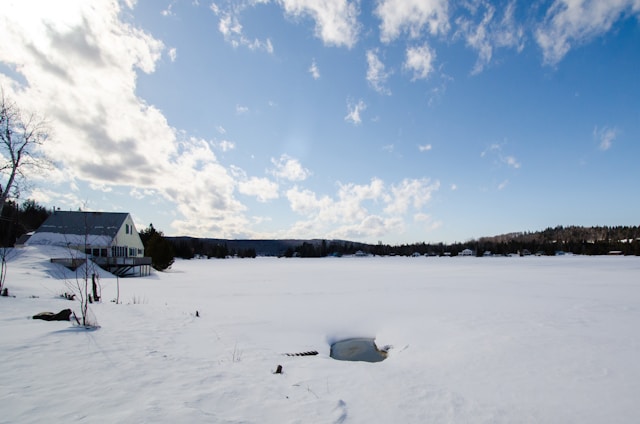
Ice Fishing Season in Maine
There is no single start date, because the rules depend on the zone and on the individual lake. In the North Zone, general law closes lakes, ponds, rivers, streams and brooks to all fishing from October 1 through March 31, but hundreds of North Zone lakes and ponds are open to ice fishing under special fishing laws. Southern waters are generally open to ice fishing under general law, though special laws apply to many individual waters. Always look up the water you plan to fish.
The ice itself sets the real calendar. Safe ice typically forms on northern Maine lakes by late December and on southern Maine lakes by mid-January, though this varies significantly year to year.
Maine Ice Fishing Rules: License, Lines and Bait
- License: A valid Maine fishing license is required for anyone 16 or older. Maine usually offers a free fishing weekend in winter, typically in February, and the dates change each year. All other fishing laws still apply on those days.
- Lines: You may fish up to five lines at any one time while ice fishing, and jig rods count toward that limit. A few waters carry a special law that cuts the limit to two lines per angler.
- Bait, South Zone: Live baitfish and smelts are generally allowed, except on waters with a special law that prohibits live fish as bait.
- Bait, North Zone: Live fish as bait are prohibited unless the water’s special law says otherwise.
- Artificial lures only waters: No live baitfish, and no worms either.
- Hooks: With bait, you are limited to a single baited hook per line. Smelt fishing is the exception, with no limit on baited hooks.
- Baitfish storage: Do not keep live baitfish in the water of a lake where live bait is prohibited. Keeping them in a bucket on top of the ice is the safest approach.
- Fishways: Fishing is prohibited within 150 feet of any part of a fishway.
Rules change, and special laws vary lake by lake. Before you go, read the Maine Department of Inland Fisheries and Wildlife’s ice fishing laws FAQ and its beginner’s guide to ice fishing in Maine, then check the special fishing laws for your specific water.
Ice Safety
Ice is never completely safe, and the thickness of the ice can change from one spot on a lake to the next. Four inches of clear, hard ice is the usual minimum for walking. Snowmobiles and ATVs need considerably more, and cars and trucks more still. We would not take a vehicle onto the ice with less than a foot under it, and we would not rely on a single measurement.
- Drill test holes as you go, especially on a lake you do not know well.
- Stay away from inlets, outlets, springs, narrows, pressure ridges and areas with current. Ice is thinner there.
- Wear ice picks around your neck so you can pull yourself out if you fall through.
- Ask at a local bait shop or sporting camp about current ice conditions. They know the lake better than any chart.
- Tell someone where you are going and when you plan to be back.
- If you use a portable heater in a shelter, ventilate it. Carbon monoxide is a real risk in a small, closed shack.
How Ice Fishing Works: Tip-Ups and Jigging
Most ice fishing in Maine uses one of two methods. A tip-up (often called a trap) is a small device that sits over the hole and holds a baited line below the ice. When a fish takes the bait, a flag springs up to tell you to head over and pull in the line. Because you can set several and watch them all at once, tip-ups are a common way to fish for togue, salmon and pickerel.
Jigging means working a short rod up and down over the hole yourself, with a small lure or a hook with a bit of bait. It keeps you busy and is a popular approach for perch, smelt and brook trout.
Whichever you use, every line counts toward your limit, and the bait rules for your water apply. The Maine Department of Inland Fisheries and Wildlife has a beginner’s guide to ice fishing in Maine that covers the basics, and a guide or sporting camp can show you the setup on your first trip.
What to Fish For
Lake Trout (Togue): Maine’s premier ice fishing quarry. Moosehead Lake, Chesuncook Lake, and the large wilderness lakes of northern Maine hold excellent togue populations. Fish are taken in deep water, typically 60 to 100 feet, using tip-ups baited with live smelt where live bait is allowed. A 10-pound togue is a good fish.
Landlocked Salmon: Sebago Lake is the legendary destination for ice fishing salmon in Maine. The area around the deep basin at the south end of the lake produces salmon throughout the winter. The Grand Lake Stream area lakes and the Rangeley chain also offer good salmon ice fishing.
Smelt: Perhaps the most purely enjoyable Maine ice fishing experience. Smelt run in large schools under the ice of many central and coastal Maine lakes. Messalonskee Lake in Belgrade, Annabessacook Lake in Winthrop, and numerous Downeast lakes have strong smelt populations. The gear is minimal, with a tiny hook, a small piece of worm and a thin line, and the action can be fast. Smelt are also exceptional eating, best fried whole in butter.
White Perch and Yellow Perch: Abundant in many Maine lakes and a favorite of family ice fishermen. Easy to catch, excellent table fare, and requiring no special equipment or technique.
Chain Pickerel: Common in many southern and central Maine lakes, and a popular catch on tip-ups.
Brook Trout: Found in many smaller ponds, and some are stocked, so check the rules for your water. Brook trout are a reason to fish a quiet pond instead of a big lake.
Where to Ice Fish in Maine
- Moosehead Lake: Maine’s largest lake, with togue, salmon and bobhouse villages near Rockwood. See our Moosehead Lake guide and Greenville, the main base for visitors.
- Rangeley Lakes: Salmon and trout in a classic western Maine setting. See Rangeley.
- Sebago Lake: Southern Maine’s big salmon lake, within easy reach of Portland.
- Belgrade and Winthrop lakes: Smelt, perch and bobhouse communities in central Maine.
- Grand Lake Stream area: Salmon and quiet water in Washington County.
What to Bring
- An auger or ice drill, and a skimmer to clear slush from the hole
- Tip-ups and a couple of short jigging rods
- Ice picks, a spud bar to check the ice, and cleats for your boots
- A sled to haul gear, and a bucket to sit on or a folding chair
- Warm layers, insulated boots, a hat and good gloves. Lakes are windy and temperatures can be well below zero
- Your fishing license, a thermos, snacks, and a charged phone
Bobhouses: Maine’s Ice Fishing Villages
The bobhouse (ice fishing shack) is a Maine institution. These small heated structures, ranging from plywood boxes to elaborate insulated cabins with wood stoves and bunks, are towed onto frozen lakes each winter by the hundreds. On Moosehead Lake near Rockwood, on Messalonskee Lake in Belgrade, and on dozens of other Maine lakes, bobhouse communities form each winter and last until ice-out. Visiting one of these ice fishing villages, with wood smoke rising from a hundred stovepipes and snowmobiles coming and going, is a genuinely unique Maine experience.
If you plan to bring your own shelter, check the rules for your lake. Shelters generally must come off the ice by a set date each spring, and the deadline depends on the water.
If you would rather see ice fishing as a community event, the Moosehead Lake Ice Fishing Derby is listed on our events calendar. Check the listing for current dates.
Guided Ice Fishing
First-time ice fishermen are strongly encouraged to go out with a Registered Maine Guide or to rent a bobhouse from an outfitter who provides gear and instruction. The learning curve is steep without local knowledge. Knowing where fish hold at different times of day, how deep to set tip-ups, and how to read ice conditions safely takes years to develop. Many sporting camps around Moosehead Lake and in the Rangeley region offer ice fishing packages including heated bobhouse rental, gear, bait and guide service.
Plan Your Maine Ice Fishing Trip
Browse Maine lodging for cabins and inns near the lakes, and see the Maine snowmobiling guide if you plan to ride to your fishing spot. Looking at the whole season? Our Maine in Winter guide covers what is open and closed from December through March, and our Maine skiing guide covers the mountains.
Maine Ice Fishing FAQ
Do I need a license to ice fish in Maine?
Yes. A valid Maine fishing license is required for anyone 16 or older. Maine usually has a free fishing weekend in winter, but you should check the dates each year.
How many lines can I use ice fishing in Maine?
Up to five lines at a time, and jig rods count toward the limit. A few waters have a special law limiting anglers to two lines.
Can I use live bait for ice fishing in Maine?
It depends on the water. Live baitfish and smelts are generally allowed in the South Zone, but not on waters with a special law prohibiting them. In the North Zone, live fish as bait are prohibited unless a special law for that water says otherwise. Artificial-lure-only waters allow no live bait and no worms.
How thick does the ice need to be?
Four inches of clear, hard ice is the usual minimum for walking. Snowmobiles, ATVs and vehicles need considerably more, and ice thickness can vary across a single lake. When in doubt, drill a test hole and ask locally.
When does ice fishing season start in Maine?
It depends on the water. Safe ice usually forms in northern Maine by late December and in southern Maine by mid-January. Many North Zone lakes are closed to fishing from October 1 to March 31 unless a special law opens them for ice fishing, so check the rules for your lake.
Where is the best ice fishing in Maine?
Moosehead Lake is the best known for togue and bobhouse villages, Sebago Lake for salmon in southern Maine, and the Rangeley Lakes for salmon and trout. For smelt and perch, look at the Belgrade and Winthrop lakes.
Can beginners go ice fishing in Maine without a guide?
Yes, but a guide or a sporting camp package makes a first trip much easier and safer. They provide gear, bait and local knowledge about where the fish are and how thick the ice is.
Related: See our Maine in Winter guide for skiing, snowmobiling, ice fishing, winter events, and what is open and closed from December through March.
Riding to your fishing spot? Your snowmobile has to be registered. See snowmobile registration in Maine.