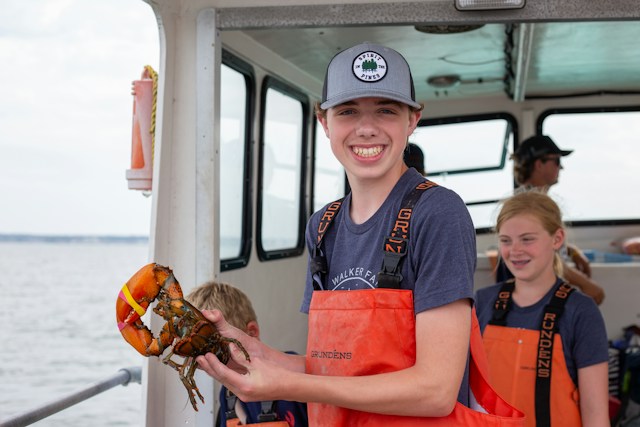
Maine lobstering is one of the oldest working traditions on the coast, and it is still done mostly by independent owner-operators in small boats. Whether you are curious how the whole thing works, thinking about the industry as a career, or just want to understand the colorful buoys you see from the ferry, this guide covers how lobstering works, the rules that protect the fishery, the seasons, how people get licensed, and where you can see it for yourself.
The rules below come from the Maine Department of Marine Resources (DMR) guide to lobstering and its apprentice regulations. Rules get adjusted from time to time, so confirm anything you plan to act on with DMR directly.
Maine Lobstering at a Glance
- Legal size: between 3 1/4 and 5 inches, measured along the body shell
- Trap limit: 800 per commercial vessel
- Egg-bearing females: must be released, and notched so they are protected
- Getting in: an apprenticeship of at least 1,000 fishing hours over at least 24 months
- 2024 landings: a little over 86 million pounds, worth about $528 million at the boat
How a Day of Lobstering Works
Most Maine lobstermen work from a single boat, often with one helper called a sternman, and many start well before sunrise. The day is a loop that repeats all day long: pull a trap up from the bottom, open it, sort what is inside, rebait it, and put it back.
- Haul the trap. The boat idles up to a buoy, the line is run through a hauler, and the trap comes up from the bottom.
- Measure everything. Each lobster is checked with a gauge. Too small, too big, or carrying eggs, and it goes back in the water.
- Notch the females with eggs. Before a berried female is released, she gets a small cut in her tail flipper that marks her as protected (more on that below).
- Rebait and reset. The trap is refilled with bait and dropped back overboard, usually while the boat is already moving to the next buoy.
- Sell the catch. Lobsters are kept alive in tanks or crates and sold at the end of the day to a dealer, a co-op or a wharf.
Traps, Buoys and Boat Colors
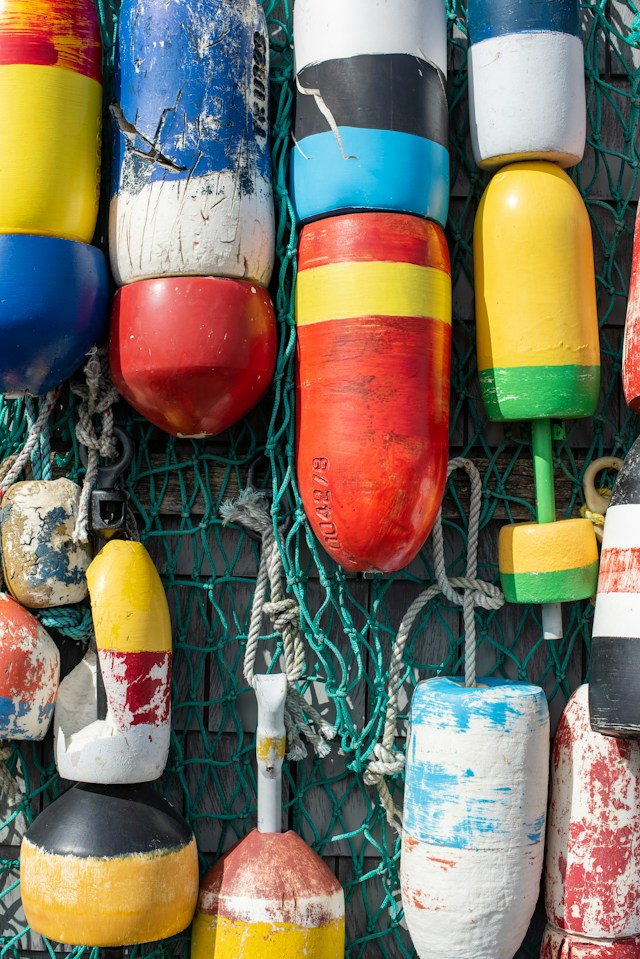
Every lobsterman picks a color scheme for their buoys, and it is registered so that no one else in the same area is fishing with the same or a similar pattern. That is what the bright stripes and bands on the buoys are: a way to tell at a glance whose gear is whose. The same color design is painted on both sides of the boat’s hull, so Marine Patrol and other fishermen can match a boat to its buoys from a distance.
Traps and buoys must also be marked with the owner’s license number, and every trap has to carry a current state tag, which is bought from DMR and replaced each year. In other words, a buoy is not just a float. It is a registered mark of ownership.
The Rules That Protect the Fishery
Part of the reason Maine still has a lobster fishery at all is a set of rules that protect the breeding stock. Several of them are simple enough to explain on a dock.
- Size limits. A lobster must measure between 3 1/4 and 5 inches along the carapace (the body shell, measured from the back of the eye socket). Anything smaller is too young. Anything larger is a proven breeder. Both go back.
- Egg-bearing females. It is illegal to keep a female carrying eggs under her tail. Lobstermen release her right away.
- The V-notch. Before a berried female goes back, the lobsterman cuts a small V-shaped notch in her tail flipper. The mark stays through later molts, and it is illegal to keep a female with that notch, so she is protected for years even when she is not carrying eggs.
- Trap limits and tags. Commercial lobstermen are limited to 800 traps per vessel, and every trap needs a current state tag.
- Hauling hours. From November through May, traps can be hauled at any hour. In summer, hauling is restricted at night, and from June through August there is no hauling from late Saturday afternoon until early Monday morning.
Lobster Seasons in Maine
There is no closed season in Maine the way there is for deer or salmon. Traps can be set at any time of year, and lobstering goes on across all four seasons. What changes is how many boats are out, where the lobsters are, and what they are like.
- Winter and spring: fewer boats, and many lobstermen fish farther offshore or take time off. Hauling is allowed at any hour from November 1 through May 31.
- Summer: lobsters move toward shallower water and begin to molt, and the new-shell lobsters sold in summer are typically softer-shelled. Night hauling and weekend hauling rules apply.
- Fall: typically the heaviest landings of the year, with hard-shell lobsters and many boats working at once.
If you are visiting to eat lobster, see our guides to how to eat a lobster and the best lobster rolls in Maine.
How Someone Becomes a Lobsterman
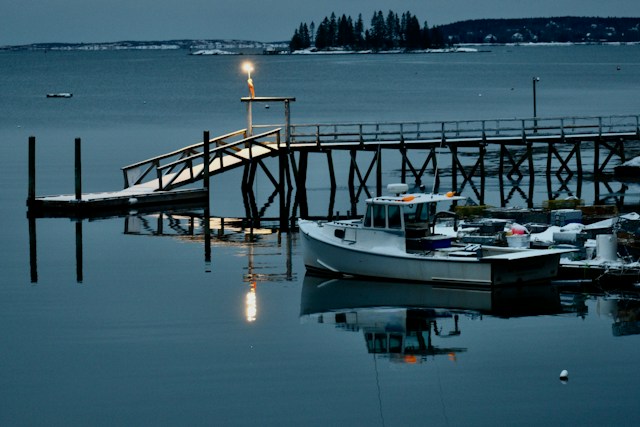
You cannot simply buy a boat and start setting traps. The route in is the DMR Lobster Apprentice Program, and it is deliberately slow. To enter, you first hold an apprentice or student lobster and crab license. Then, under DMR’s apprentice regulations, you need to:
- log at least 1,000 fishing hours over at least 200 calendar days
- spread the program over at least 24 months from your first logged day
- work under a sponsor who has held a Class I, II or III lobster and crab license for at least five years, and who initials each daily entry
- have a Marine Patrol officer sign your log after every 250 hours
- complete a U.S. Coast Guard approved fishing vessel drill conductor training course
Up to 200 of the 1,000 hours can be gear work, such as building and repairing traps, though boat repairs do not count. Finishing the program makes you eligible for a commercial lobster and crab license, but entry to the fishery is limited. Some zones and island communities keep waiting lists, so check with DMR about the area where you want to fish.
Maine also offers a non-commercial lobster and crab license for residents. According to DMR’s guide, it allows you to catch lobsters for your own use with a handful of traps, but not to sell them.
Maine Lobstering by the Numbers
Lobster is the backbone of Maine’s commercial fishing economy. According to DMR data reported by the Island Institute, Maine lobstermen landed a little over 86 million pounds in 2024, down from about 96.9 million pounds in 2023. Even so, the value at the boat rose from about $464 million to about $528 million, because the average price climbed to $6.14 a pound, the second-highest on record.
Those are “boat prices,” what the lobsterman is paid at the dock. What you pay at a restaurant or a seafood counter is a different number, and it moves with the season, the shell and the market.
A Short History of Maine Lobstering
According to the DMR, the first recorded lobster landings in Maine were reported in 1605 by a member of Captain George Weymouth’s crew. For a long time lobster was thought of as “poverty food” in colonial days, served to prisoners and indentured servants. Commercial lobstering for outside markets grew after about 1840, when the canning industry arrived, and by 1880 overfishing was already obvious: canneries were processing half-pound lobsters. The first lobster pound, a place to hold live lobsters, appeared on Vinalhaven in 1875, and by the 1930s local buyers on land had replaced the traveling smacks that once collected the catch.
Where to See Lobstering in Maine
- Working harbors. Almost any harbor on the coast has lobster boats. Go early in the morning, when boats are leaving, or mid-afternoon, when they come in and unload at the wharf.
- Lobster boat tours. Several harbors run boat trips where you can watch traps hauled, handle a lobster and learn the buoy system. Most run seasonally, so check the operator’s schedule before you go.
- Maine Maritime Museum. The Bath museum has a permanent exhibit on lobstering and the Maine coast, covering lobster biology, boats and gear.
- Lobster boat races. Summer racing is one of the most fun ways to see these boats at full throttle. See our lobster boat races guide.
- Maine Lobster Festival. Held in Rockland each summer. See our Maine Lobster Festival page.
Can You Go Lobstering in Maine Yourself?
Yes, but the rules favor Maine residents. Under state law, fishing for lobsters without a commercial license requires a noncommercial lobster and crab license, and that license is limited to Maine residents. Applicants must be at least 8 years old and either pass a written exam or have held a commercial license before. The statute sets the fee at $60 plus a $5 surcharge, so confirm the current amount with the Department of Marine Resources.
A noncommercial license holder may fish no more than 5 traps at a time, and no more than 10 noncommercial trap tags can be issued to one boat, no matter how many license holders are aboard. You cannot sell your catch or remove the meat from the shell for sale. The full rules are in Title 12, section 6421 of the Maine statutes.
Visitors from out of state cannot set their own traps, so the way to experience lobstering is a boat tour.
Lobster Boat Tours in Maine
These operators take visitors out on working lobster boats. Prices, schedules and seasons change, so check each one before you plan around it.
- Lucky Catch Cruises, Portland: tours last 80 to 90 minutes. Guests can help haul traps, learn the lobster categories (shedders, shorts, culls and keepers) and look at the crabs, starfish and other animals from the traps in a see-through tank. Lobsters can be bought at boat price afterward. The company recommends reservations and says it is not out lobstering every day.
- Rugosa Lobster Tours, Kennebunkport: tours run about 1.25 hours aboard a Downeast-style wooden boat from the Nonantum Resort and Marina on the Kennebunk River. The Coastal Lobster Tour starts at $49 for ages 6 and up. The 2026 season has ended, and tours are expected to resume in May 2027.
- “Catch Your Dinner” Lobster Boat Tours, Corea: a Downeast option on the Schoodic peninsula side of the coast.
- Maine Maritime Museum, Bath: not a boat ride, but its permanent “Lobstering and the Maine Coast” exhibit has family-friendly interactives on lobster biology, boats and gear.
Maine’s Seven Lobster Zones
Maine’s coast is divided into seven lobster management zones, labeled A through G from east to west. Zone A runs from the Canadian border to a line south of Schoodic Point, and Zone G covers the southern coast from near Portland to the New Hampshire border. The zones matter mostly to commercial lobstermen, but they explain why the rules and the fleet look a little different from one stretch of coast to the next.
Maine Lobstering FAQ
How many traps can a Maine lobsterman fish?
A commercial vessel is limited to 800 traps. Each trap must carry a current state tag.
What size does a lobster have to be in Maine?
Between 3 1/4 and 5 inches measured along the carapace. Smaller and larger lobsters must be released.
What is a V-notched lobster?
It is a female with a small notch cut in her tail flipper, a mark that tells every lobsterman she is a protected breeder. It is illegal to keep her.
What do the colors on lobster buoys mean?
Each lobsterman registers a color scheme for their buoys, and the same colors are painted on the boat. The colors identify who owns the trap on the other end of the line.
Can you lobster in Maine without a commercial license?
Maine residents can apply for a non-commercial lobster and crab license, which allows you to catch lobsters for your own use with a small number of traps but not to sell them. DMR’s guide describes it as a resident license, so visitors are better off taking a boat tour.
Is there a lobster season in Maine?
No. Lobstering goes on all year, though the heaviest landings typically come in late summer and fall, and hauling hours are restricted in summer.
Planning a visit? Our lobster roll guide and how to eat a lobster page are good next stops.