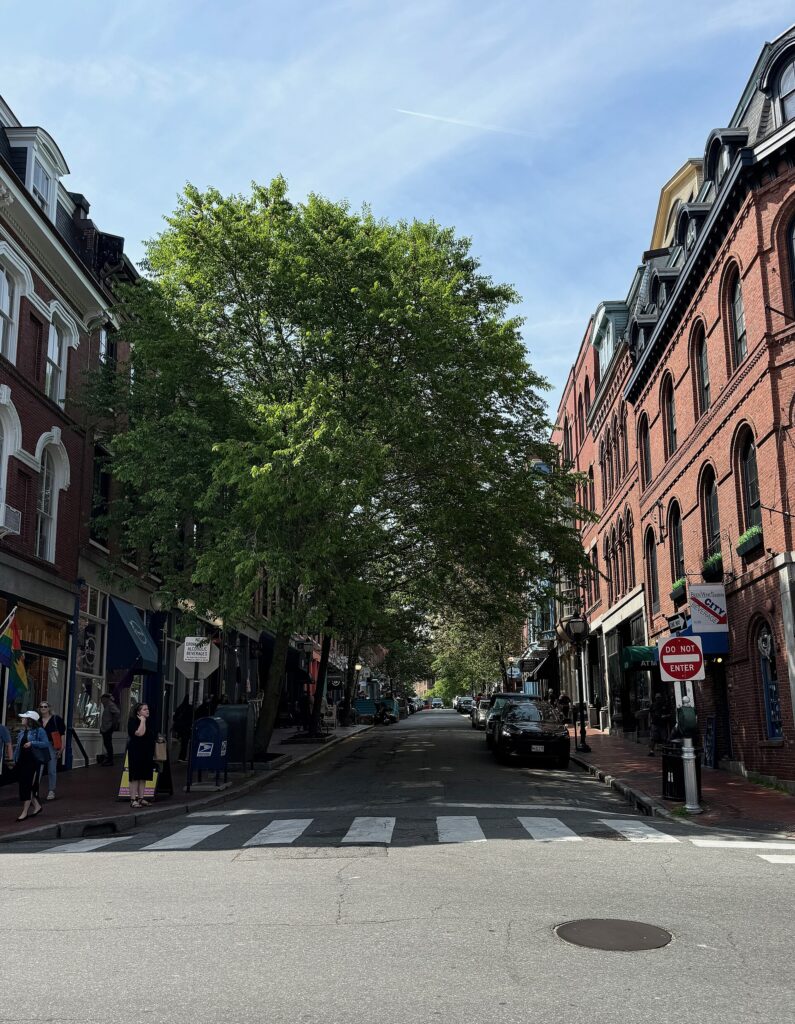
The Old Port is Portland’s historic waterfront district, known for brick buildings from the rebuilding after the Great Fire of 1866, granite-paved streets, working wharves, shops and restaurants. Sources draw its boundaries differently, so here is where it is, how it got its look, where to park, and the festival people still ask about.
The Old Port at a glance
- What it is: a district on the southeastern side of the Portland peninsula, according to Wikipedia.
- Also called: the Old Port Exchange.
- Historic listing: most of it is on the National Register of Historic Places as the Portland Waterfront Historic District, added May 2, 1974, per Wikipedia.
- Main streets: Fore, Exchange, Middle, Wharf and Commercial streets.
- Visitor information: Wikipedia says the city’s visitor information booth is in Tommy’s Park, across Exchange Street from Post Office Park.
Where is the Old Port?
No source we found cites an official boundary, and each one draws the district differently:
- Wikipedia: Franklin Street (U.S. Route 1A) on the east, Commercial Street along the waterfront, and inland to Federal Street between Pearl and Temple streets, with Fore and Middle streets as the main cross streets. It borders Bayside, East Bayside, Munjoy Hill and the West End.
- Maine Atlas (a project of the Secretary of State’s office): just a few blocks between Portland Harbor and Congress Street.
- Gardner Real Estate Group: bordered by Commercial Street to the south and Congress Street to the north.
- An independent guide at portlandme.org: “not one street”, but Exchange, Fore and Wharf streets, stretches of Commercial Street and the waterfront near Maine State Pier.
- Portland Downtown: gives no written boundaries and links to a district map instead.
Commercial Street, Fore Street and the blocks between them appear in nearly every description.
How the Old Port got its look
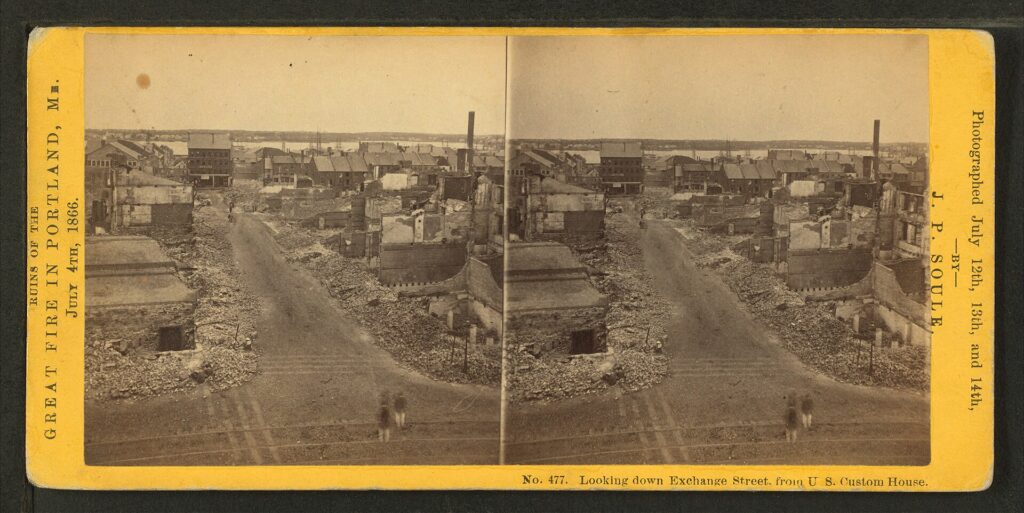
Most of the district’s look comes from the rebuilding after the Great Fire of 1866. According to Greater Portland Landmarks, the fire began on the afternoon of July 4, 1866 and burned out early on July 5. It destroyed 1,800 buildings, 1,200 of them residences housing 10,000 people. Portland was almost completely rebuilt within about two years, mostly in brick and granite to reduce fire risk, and the Old Port came back as a mostly commercial district.
The Maine Atlas says the area declined after World War II as shipping faded, businesses left and the wharves deteriorated. Preservation efforts and new investment starting in the 1970s reversed that, and warehouses became shops and housing. Wikipedia adds that the Old Port Association formed in that period and helped stop the demolition of historic buildings, including Union Station.
The Maine Atlas also names three problems the district still faces: parking, affordability, and flooding from rising seas at high tides and storms.
The Old Port Festival: why it ended
People still search for the Old Port Festival, but it ended after 2019. Portland Downtown announced on March 5, 2019 that the festival was ending, calling it the end of an era. The last one was held on Sunday, June 9, 2019. The announcement gave no specific reason and named no replacement. It said the organization would put more effort into other programs, including Pandora’s Winter Lights and the tree lighting in Monument Square. Wikipedia says the festival began in 1973 and was held on the first Sunday in June until 2009, then on the second Sunday.
Parking and getting around
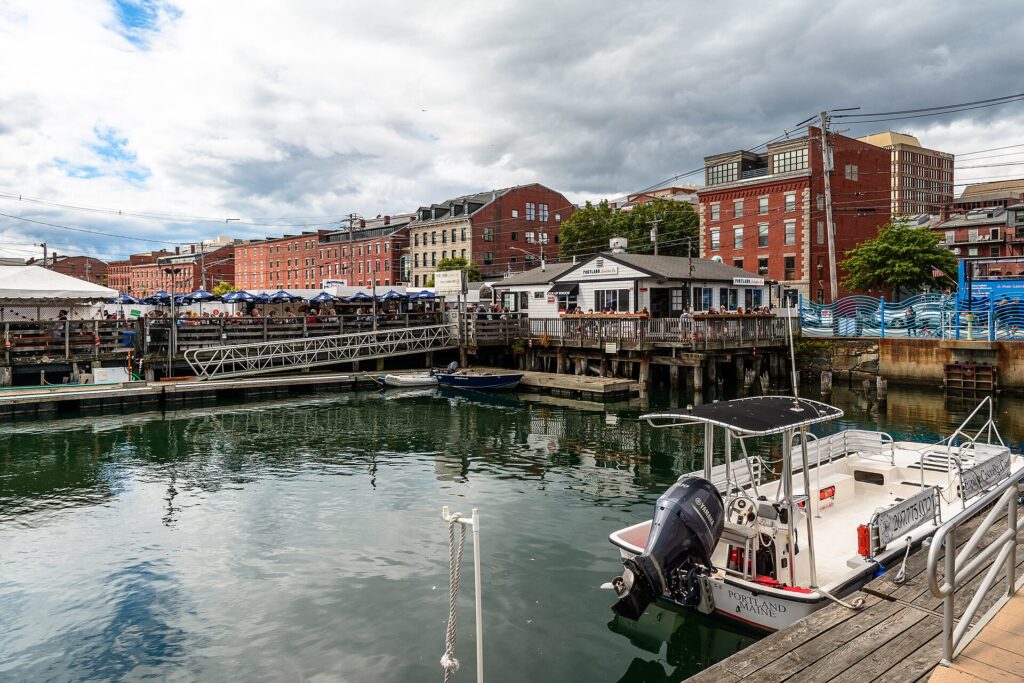
Parking is one of the district’s known challenges. Visit Portland’s parking guide, published in January 2026 and updated in September 2026, lists dozens of downtown garages and lots. These are near the Old Port:
- Casco Bay Garage, 54 Commercial Street
- Custom House Square Garage, 25 Pearl Street
- Top of the Old Port, 119 Pearl Street
- Temple Street Garage, 11 Temple Street
- Elm Street Garage, 21 Elm Street
Rates and hours vary, and the guide says fees are subject to change, so check it before you go. According to the guide, on-street parking in Portland is free from 6 p.m. to 9 a.m. Monday through Saturday, all day Sunday and on major holidays. Metered spaces have posted time limits. The independent portlandme.org guide advises parking once and walking the district.
What to see in and around the Old Port
- Exchange and Fore streets: the main shopping and dining streets, with boutiques, restaurants and bars, per Wikipedia.
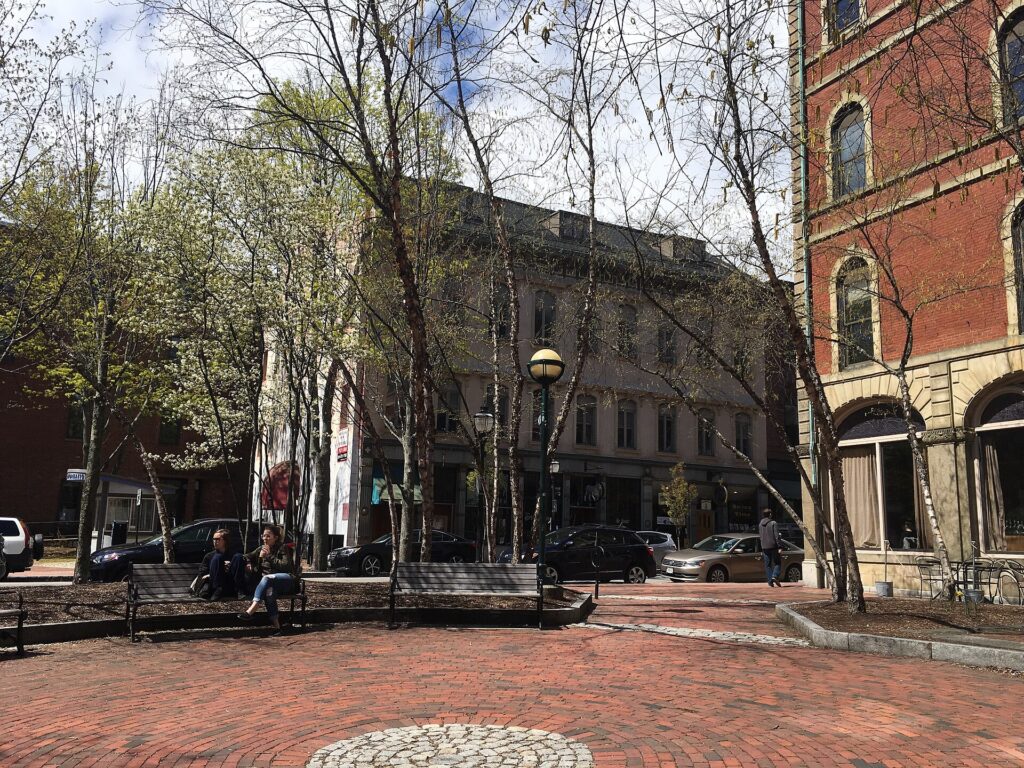
- Post Office Park: at Middle and Exchange streets, on the site of Portland’s post office from 1871 to 1965. The park was completed in 1993.
- Tommy’s Park: across Exchange Street, with the city’s visitor information booth.
- Wharf Street: the portlandme.org guide calls it the roughest stretch of cobbles, and says the streets are steep.
- The Casco Bay ferry terminal: next to Bell Buoy Park. The same guide calls Peaks Island the simplest ferry add-on from the Old Port.
That guide suggests allowing two to four hours for a first visit. For restaurants, events and a fuller list of things to do, see our things to do in Portland guide.
Why the sources disagree
- Boundaries. No source cites an official boundary. Wikipedia’s boundary description has no citation in the article, and the others each use their own streets.
- Cobblestones or granite. Wikipedia and visitor guides call them cobblestone streets. The Maine Atlas describes brick sidewalks and granite block pavers, and uses the word “cobblestone” only in photo captions.
- How many festivals. Wikipedia calls the final Old Port Festival the 46th, while Portland Downtown said it had run for 45 years.
Old Port, Portland: FAQ
What is the Old Port in Portland, Maine?
Portland’s historic waterfront district, known for brick buildings, granite-paved streets, wharves, shops and restaurants.
Where is the Old Port in Portland, Maine?
The Old Port is a district on the southeastern side of the Portland peninsula, along the waterfront. Sources differ on its exact boundaries, but Commercial Street, Fore Street and the blocks between them appear in nearly every description, and some sources extend it inland to Congress Street.
Is the Old Port Festival still held?
No. Portland Downtown ended it after the festival on Sunday, June 9, 2019.
Is parking free in the Old Port?
On-street parking is free from 6 p.m. to 9 a.m. Monday through Saturday, all day Sunday and on major holidays, according to Visit Portland’s guide. At other times it is metered, and garages charge.
What shops and restaurants are in the Old Port?
Exchange Street and Fore Street are the main shopping and dining streets, with boutiques, restaurants and bars, according to Wikipedia. Post Office Park, at Middle and Exchange streets, and Tommy’s Park, which has the city’s visitor information booth, are nearby. For more to do, see our things to do in Portland guide.
Where can I park near the Old Port?
Garages near the Old Port include Casco Bay Garage (54 Commercial Street), Custom House Square Garage (25 Pearl Street), Top of the Old Port (119 Pearl Street), Temple Street Garage (11 Temple Street) and Elm Street Garage (21 Elm Street), according to Visit Portland’s parking guide. Rates and hours change, so check the guide before you go.
Why is the Old Port made of brick?
Much of it was rebuilt after the Great Fire of 1866 in brick and granite to reduce fire risk.
Our details come from Wikipedia, the Maine Atlas, Greater Portland Landmarks, Portland Downtown (festival announcement), Visit Portland, Gardner Real Estate Group and an independent guide at portlandme.org. Parking rates and events change, so confirm before you go.