No resident wolf population has been confirmed in Maine. Wolves were wiped out here by the 1890s, and the state and federal biologists quoted in the sources below say there is no breeding population today. A small group of advocates says wolves are quietly returning from Canada, and a DNA study and a few trail camera photos keep the question open. Here is what each side has, and why they disagree.
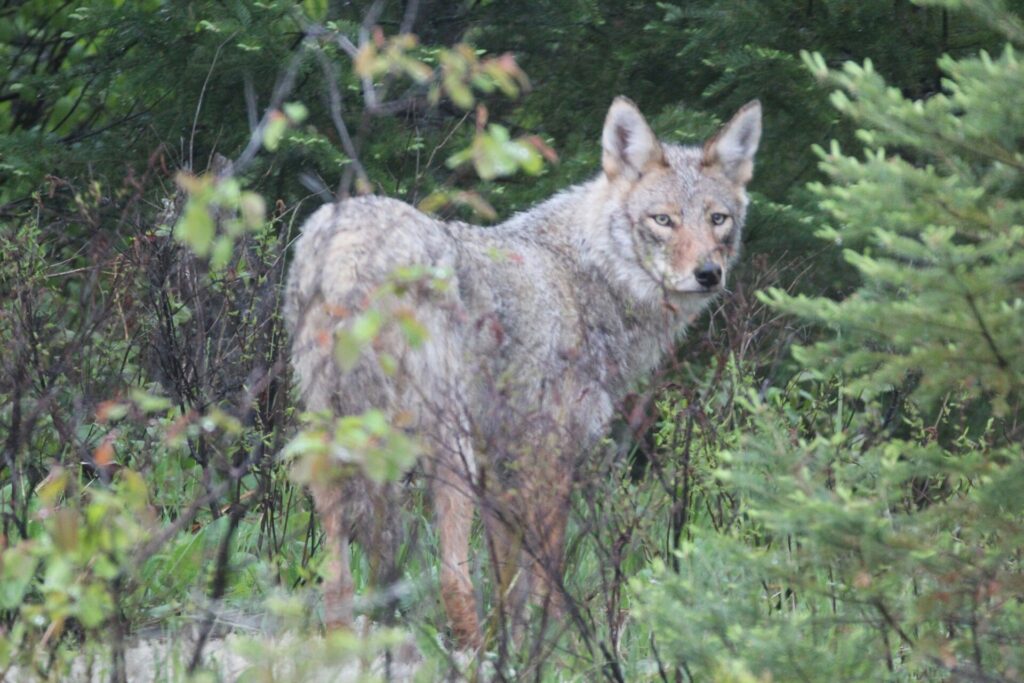
What the state says about wolves in Maine
The Maine Department of Inland Fisheries and Wildlife (IFW) says on its gray wolf page that wolves were gone from Maine by the 1890s. Maine paid bounties on wolves from 1832 to 1903, and Scarborough had one as early as 1730.
IFW says two wolves were killed in Maine, one in 1993 and one in 1996, and that their origin is unknown. It adds that there is “no conclusive evidence” of wolves reproducing or forming packs in the state. It also calls natural recolonization from Quebec highly unlikely, citing the St. Lawrence River, farmland in southern Quebec and liberal trapping rules there. Mark McCollough, a U.S. Fish and Wildlife Service biologist in Orono, told the Sun Journal there is no documented breeding population, and IFW’s Walter Jakubas said, “As far as I know, we do not have a wolf population in Maine.”
The DNA study of Maine coyotes
The best evidence that wolf genes are in Maine is a 2004 report by Wilson, Jakubas and Mullen for IFW and the University of Maine. They tested 100 coyotes collected across 21 townships, mostly in northern Maine, from December 2000 to February 2001.
- 93 percent had more than half eastern coyote ancestry.
- 22 percent had wolf ancestry above 5 percent.
- Five animals had more than 30 percent eastern Canadian wolf ancestry.
- One 27-pound adult female had about 89 percent eastern Canadian wolf ancestry.
The authors concluded that wolf genes have mixed into Maine’s coyotes. They also warned that a high wolf ancestry does not necessarily mean a wolf immigrated, and that genetics and appearance do not reliably tell eastern coyotes from eastern Canadian wolves.
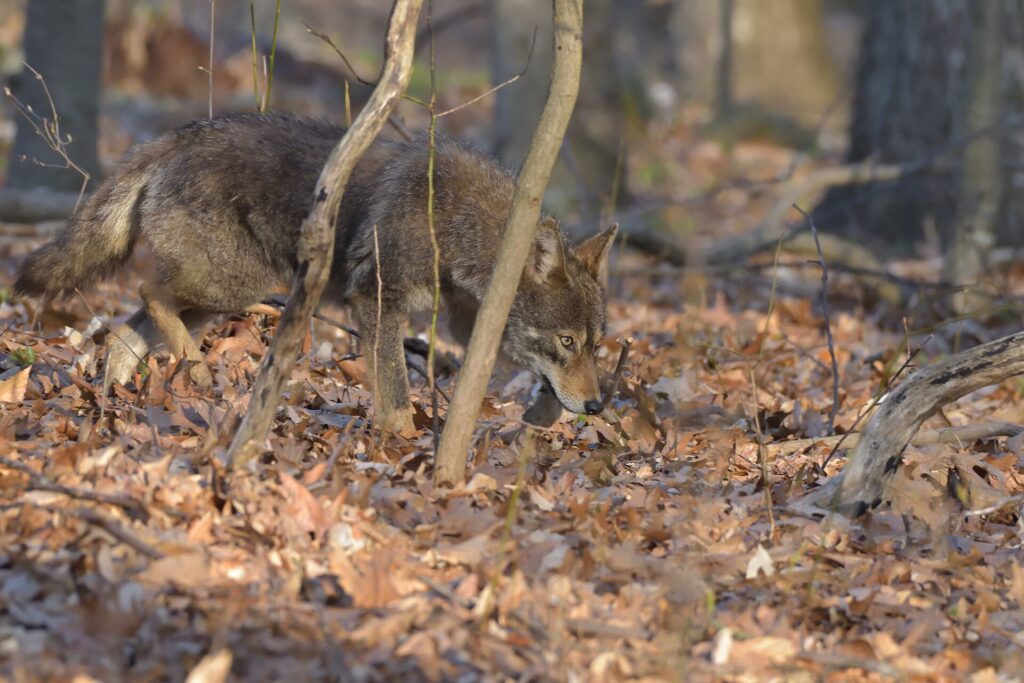
Trail camera photos and possible wolves
The Sun Journal reported two 2013 trail camera photos. At Wilsons Mills, McCollough said the larger of two animals was “definitely not an Eastern coyote,” while Jakubas found the evidence inconclusive. At Gorham, the Maine Wolf Coalition’s John Glowa thought the animal looked like a wolf, and Jakubas was skeptical.
In 2023 the International Wolf Center passed along a report that a local group had documented what it called the fourth possible wolf on camera in northern Maine, and said the state and citizen scientists disagree about whether wolves exist there. We have not seen a DNA result for any of these photos.
In the wider Northeast, an AP report from 2022 described a similar fight over an 85-pound canine shot near Albany, New York. One lab found mostly wolf ancestry and a second found it most closely related to an eastern coyote, and a Princeton geneticist said both tests used limited data. Maine wildlife director Nate Webb said wolves in numbers would be preying on moose, and that this is not happening in Maine.
Why the sources disagree
- What counts as a wolf. The animal that lived here historically was the eastern Canadian wolf, and federal officials treat it separately from the gray wolf, per 2014 reporting. Coyotes in Maine carry some of its genes, so DNA alone does not settle the question.
- Proof versus possibility. The state wants documented reproduction or a pack. Advocates point to scattered photos and killed animals that they say were misidentified as coyotes. Neither side has produced both.
- Which animals count. IFW’s 1993 and 1996 wolves have unknown origins, so they may have been escaped captives or wanderers. Glowa says at least half a dozen wolves were killed in New York, Massachusetts, Vermont and Maine from 1993 to 2007, which the AP attributes to him and which we have not verified.
Wolves in Maine: FAQ
Are there wolves in Maine?
No resident population has been confirmed. IFW says there is no conclusive evidence of packs or reproduction, though some advocates and a 2004 DNA study show wolf genes in Maine coyotes.
When was the last wolf killed in Maine?
IFW lists two wolves killed in Maine, in 1993 and 1996, with unknown origins. Wolves were gone as a resident species by the 1890s.
Are Maine coyotes part wolf?
Some are. In the 2004 study, 22 percent of 100 tested coyotes had more than 5 percent wolf ancestry.
What should I do if I see a wolf in Maine?
IFW asks people to report sightings, and says photos, tracks, scat or hair can help verify them.
Our details come from IFW’s gray wolf page, the 2004 coyote and wolf genetics report, the Sun Journal, AP reporting carried by Boston.com and the International Wolf Center. We have not independently verified these accounts, and the IFW page may not reflect the current federal listing.