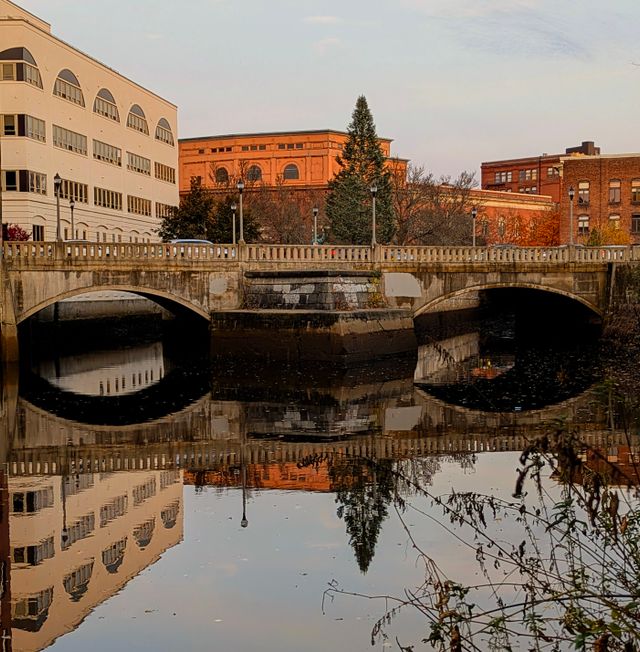
Bangor got its name by accident, became the lumber capital of the world, and was rebuilt from ashes in a single generation. After three decades covering Maine, here is the story of how a Penobscot River trading post became the “Queen City” of eastern and northern Maine.
Bangor, Maine was settled by English-speaking families in the late 1760s as Kenduskeag Plantation and incorporated in 1791 under the name Bangor, reportedly chosen by mistake when the Rev. Seth Noble named a favorite hymn tune instead of the town. It became the “Lumber Capital of the World” by the 1830s, grew into the “Queen City of the East,” and was rebuilt after the Great Fire of April 30, 1911 into the architecture downtown Bangor is known for today. Here is the full story.
Penobscot Homeland and the First Europeans
Long before any town existed, the head of tide on the Penobscot River, where Kenduskeag Stream joins the river, was Penobscot homeland and a natural meeting place. European explorers reached it early: a Spanish expedition sailed up the Penobscot in 1525, and Samuel de Champlain explored the river to the head of tide at the future site of Bangor in 1604. Fishing and the fur trade drew the first traders, and the settlers who followed adapted the local place name over the years until it settled as Kenduskeag.
Kenduskeag Plantation and the Hymn Tune That Named a City
English-speaking settlers put down roots here in the late 1760s, and the community was known as Kenduskeag Plantation. The first sawmill went up in 1772. By 1790 the residents wanted to incorporate as a town and chose the name Sunbury. They sent their minister, the Rev. Seth Noble, who had arrived in 1786, to Boston with the petition, since Maine was then part of Massachusetts.
Here the story turns into local legend. Noble was an organist and composer, and while waiting to present the petition he was said to be whistling his favorite hymn tune, “Bangor,” by the English composer William Tans’ur. Asked the name of the town, the story goes, he thought he was being asked the name of the tune. Whatever the truth, the Massachusetts General Court approved the incorporation of Bangor on February 25, 1791, and the name stuck.
Lumber Capital of the World
Bangor’s location made its fortune. Loggers cut the vast North Woods, floated the logs down the Penobscot, and the mills at Bangor sawed them for shipment around the world. By the mid-1830s the area had more than 300 sawmills, and Bangor had earned its title as the Lumber Capital of the World. By 1860 it was the largest lumber port on earth, with some 3,300 lumber ships passing through its docks in that year alone, and roughly a billion board feet a year shipped from its wharves until the 1870s.
The wealth is still visible. Lumber barons built Greek Revival and Victorian mansions along the streets above the river, and substantial churches rose across the city. Bangor became a city in 1834, and by the 1860s it was known as the “Queen City of the East.” The Penobscot River Log Drivers are remembered in a sculpture beside the Bangor Public Library.
Hannibal Hamlin and the Civil War Years
Bangor’s best-known 19th-century citizen was Hannibal Hamlin, Abraham Lincoln’s first vice president, who made his home here; a bronze statue of him stands on the Kenduskeag Mall downtown. The city sent its sons to the Civil War as well. The 20th Maine Infantry, famous for holding Little Round Top at Gettysburg under Joshua Chamberlain, drew many of its men from the region, and a Bangor bridge is named for Chamberlain.
The Great Fire of 1911
On April 30, 1911, fire swept through downtown Bangor. When it was over, 55 acres were gone: the high school, the post office and custom house, the public library, the telephone and telegraph companies, banks, two fire stations, nearly a hundred businesses, six churches, a synagogue, and 285 homes. The blaze was visible from Belfast, and the city also lost large portions of its archives.
Bangor rebuilt quickly, using the best materials and the most fashionable styles of the day, with architects from Boston and New York working alongside local ones. The result is an architectural showcase of Mansard, Beaux-Arts, Greek Revival, and Colonial Revival buildings, preserved today as the Great Fire of 1911 Historic District on the National Register of Historic Places. Walking downtown Bangor is walking through that reconstruction.
From Pulp, Rails, and Runways to Today
As the great pine forests thinned and steam and steel replaced wooden ships, the lumber boom faded. Pulp and paper took over from sawn lumber, and railroads replaced river transport. Local investors backed the Bangor and Aroostook Railroad, which opened northern Aroostook County to settlement. In the 20th century Bangor became an important stopover on the Great Circle air route between North America and Europe, a role that still shapes Bangor International Airport today. The city is also home to one of the nation’s oldest theological seminaries, and local tradition credits Bangor with inventing the toothpick and the snowplow.
Today Bangor is the commercial, medical, and cultural center for northern, central, and eastern Maine, with an economy long since diversified beyond forest products and shipbuilding.
Paul Bunyan, Stephen King, and Bangor’s Landmarks
Two icons define modern Bangor. The 31-foot Paul Bunyan statue on Main Street, erected in 1959, nods to the city’s lumbering heritage. And author Stephen King has long lived in Bangor; in 2013 he and his wife Tabitha pledged $3 million to the Bangor Public Library, itself rebuilt after the 1911 fire. The Cross Insurance Center now stands where the old Bangor Auditorium, another Paul Bunyan landmark, once hosted the city’s big events.
History of Bangor, Maine: FAQ
When was Bangor, Maine founded?
English-speaking settlers arrived in the late 1760s and the community was known as Kenduskeag Plantation. It was incorporated as Bangor on February 25, 1791, and became a city in 1834.
Why is Bangor, Maine called Bangor?
According to local tradition, the Rev. Seth Noble was sent to Boston to incorporate the town as Sunbury but instead gave the name of his favorite hymn tune, “Bangor,” when asked what to call it. The General Court approved the name in 1791.
Why was Bangor called the Lumber Capital of the World?
Bangor sat at the head of tide on the Penobscot River, where logs cut in the North Woods were sawed and shipped. By the mid-1830s it had more than 300 sawmills, and by 1860 it was the largest lumber port in the world.
What was the Great Fire of 1911 in Bangor?
A fire on April 30, 1911 destroyed 55 acres of downtown Bangor, including the library, post office, high school, six churches, a synagogue, and 285 homes. The city rebuilt quickly, and the reconstructed district is now the Great Fire of 1911 Historic District.
Explore more: our Bangor travel guide, living in Bangor guide, and the history of Portland, Maine. MaineGuide.com has been Maine’s resource guide since 1995.