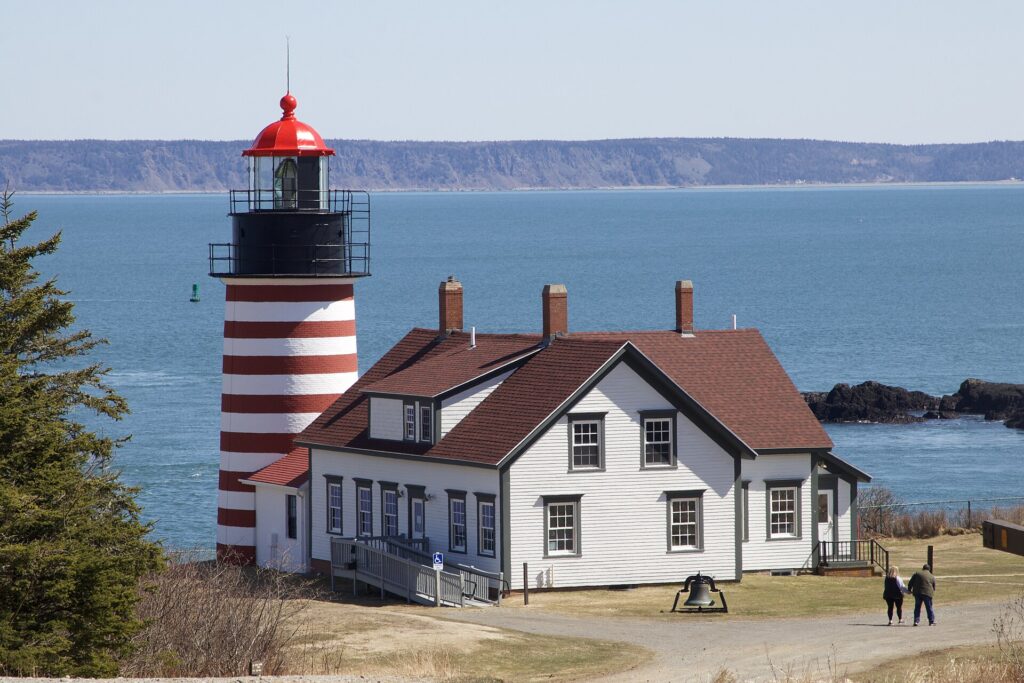
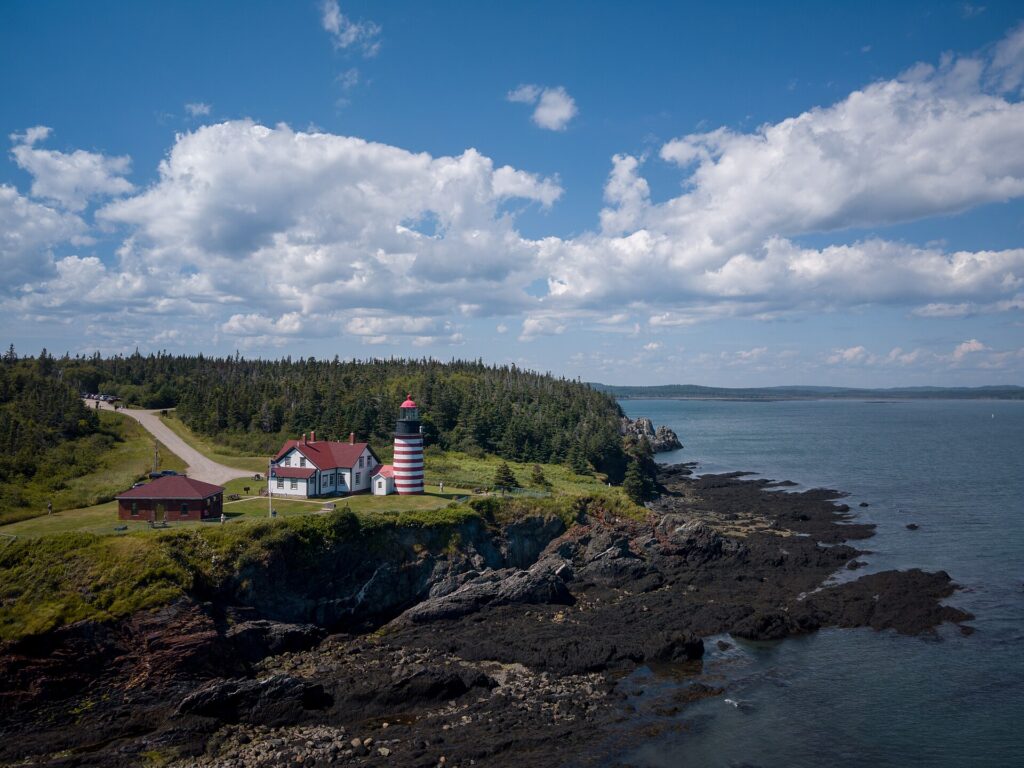
West Quoddy Head Light is the red and white striped lighthouse in Quoddy Head State Park in Lubec, Maine. Visit Maine places it on the easternmost point in the continental U.S. The 49-foot tower dates to 1858. For 2026 the tower is closed with no tower tours scheduled, and the keepers’ association says the visitor center is closed for restoration, with a reopening anticipated for the 2027 season. You can still walk the grounds and see the tower from the park. We cover what is open, fees, trails and where the sources disagree below.
Details change, so confirm hours, fees and access before you go. For a full day in town, see our guide to Things to Do in Lubec.
West Quoddy Head Light at a Glance
- Where: Quoddy Head State Park, 973 South Lubec Road, Lubec, ME 04652.
- Tower: 49 feet tall, with the lantern 83 feet above sea level, per the keepers’ association and Wikipedia.
- Stripes: 8 red and 7 white, each about 25 inches wide, per the keepers. They say it is the only candy-striped tower in the United States.
- Present tower: first lit in 1858. The first tower was a wooden structure built in 1808.
- Tower and tours: closed, with no tower tours scheduled for 2026.
- Park hours: 9 a.m. to sunset from May 15 to October 15. Off-season, visitors may come during daylight hours, per the state park guide.
- Admission: a fee applies, paid at a self-service station in the picnic area lot. The state guide lists no amount.
Is West Quoddy Head the Easternmost Point in the U.S.?
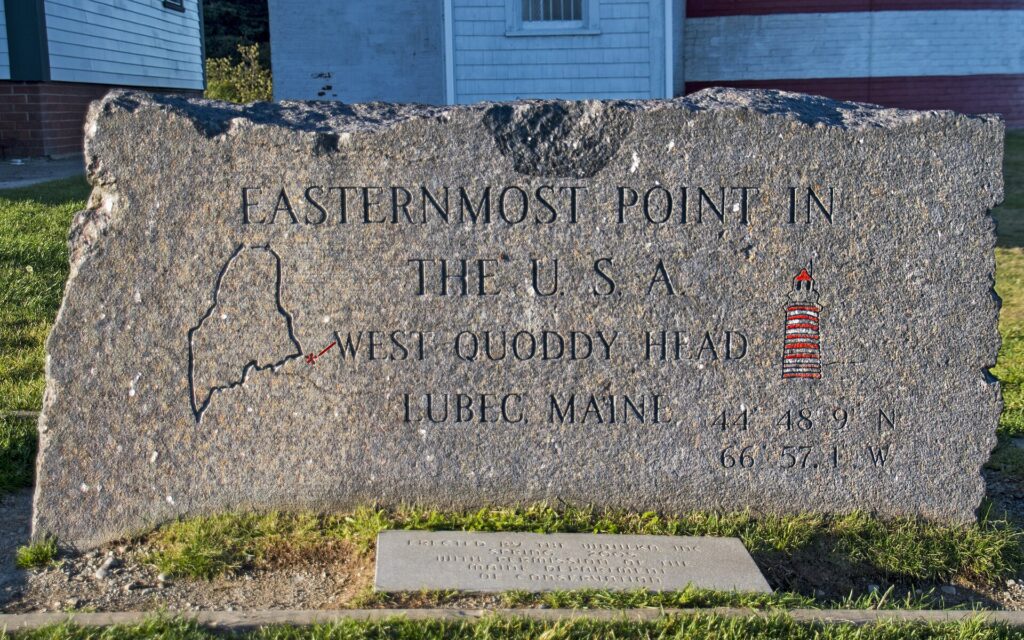
A stone sign at the site calls the lighthouse the easternmost point in the U.S.A., and the state’s guide calls the park the “nation’s easternmost point.” Wikipedia is more precise: the lighthouse is the easternmost building in the U.S., and the true easternmost point is on rocks extending east from the shore. Visit Maine says continental U.S. Standing here, you are as far east as you can get in the lower 48.
What Is Open (and Closed)
- Tower: closed. The keepers’ homepage says it “remains closed for repairs,” and their lighthouse page says no tower tours are scheduled for 2026.
- Visitor center and museum: the keepers say it is closed for restoration “until further notice,” and they anticipate reopening for the 2027 season.
- Pop-up shop: 32 Water Street in downtown Lubec. Sources conflict on whether it is open for 2026, covered below.
- Grounds and trails: open during park hours.
The keepers’ association says tower tours are usually offered on Saturdays in July and August, during the July lighthouse celebration and on Maine Open Lighthouse Day in September, and that none are offered now. Call them at 207-733-2180. The park phone is 207-733-0911 from May 15 to October 15. Off-season, the state lists 207-941-4014.
Park Season, Fees and Rules
The state park guide lists these rules for the 541-acre day-use park:
- Season: 9 a.m. to sunset daily, May 15 through October 15. The Bureau of Parks and Lands covers October 16 to May 14.
- Off-season: visitors may come during daylight hours. The keepers say you can park outside the gate and walk in.
- Fees: paid at a self-service station in the picnic area lot. No amount is listed.
- Pets: must be leashed, attended and under control, and owners must clean up.
- Fires: only in grills, with charcoal.
- Camping: not allowed.
- Alcohol: strictly prohibited at the picnic area.
- Picnic area: tables, grills and privies. The only wheelchair-accessible privies are by the lighthouse.
Quoddy Head State Park Trails
The lighthouse is the headline, but the park around it is the reason to stay a while. The lengths below come from Maine Trail Finder. The state’s guide gives different figures for some of them.
- Inland Trail: 0.75-mile easy loop through conifer woods to High Ledge and Gulliver’s Hole.
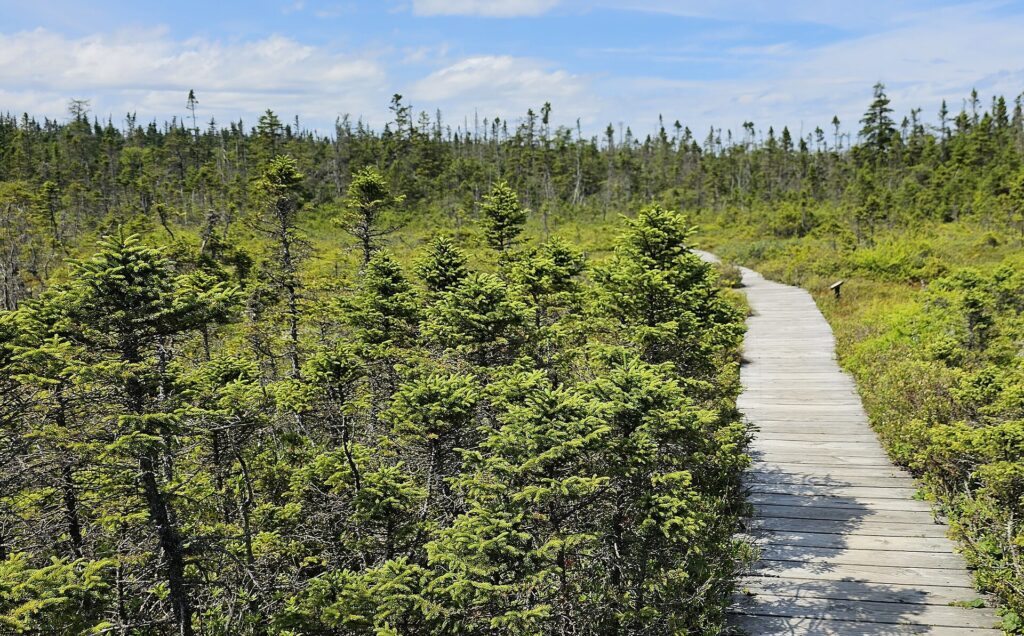
- Bog Trail: 0.2 mile of boardwalk through a bog with rare sub-arctic plants. Please stay on the boardwalk.
- Thompson Trail: 1.1 miles, easy, to the sandy beach at Carrying Place Cove.
- Coastal Trail: 1.3 miles, moderate, with steep rocky sections and the best ocean views.
- Coast Guard Trail: 0.9 mile, easy to moderate. The western half is the more accessible part.
The state guide says Carrying Place Cove has 1,200 feet of sandy beach and that the bog there is a National Natural Landmark. It also says hundreds of shorebirds gather near the park’s western boundary during migration. Clifftop sections can be hazardous when wet or foggy, the weather changes quickly and cell service is spotty. Wear real shoes and tell someone your plan.
History
The state guide and the keepers say President Thomas Jefferson commissioned the first light, a wooden tower built in 1808. Wikipedia says Congress authorized it in 1806 and that it was finished on April 21, 1808, at a cost of $5,000. The keepers’ homepage says a second tower of rubble stone went up in 1830 and that it leaked and froze inside in winter. The present red and white tower was built in 1858.
The keepers say the 1858 lens is a Fresnel lens from France, and that the light was fully automated in 1988. Wikipedia says the last officer-in-charge was Malcolm Rouse of the Coast Guard, that the station was listed on the National Register of Historic Places on July 4, 1980, and that the U.S. Postal Service issued a 25-cent stamp featuring the lighthouse in 1990. The keepers say the Coast Guard maintains it today, and that the former keeper’s house is now the visitor center.
Best Time to Visit
Summer and early fall are the easiest seasons for access, since the park is in full season from May 15 to October 15 and the pop-up shop may be open. Fog is common on this coast, so build in a flexible day. We found no official source for how early the sun reaches the point, so we do not make a sunrise claim.
Whales, Birds and Wildlife
Whales are sometimes seen offshore in summer, and the park is known for sea ducks, gannets, kittiwakes and purple sandpipers, plus shorebirds during spring and fall migration. Bald eagles are frequent in winter. Bring binoculars. On a clear day, you may also be able to see across the water toward Canada. For the Canadian side, see our Campobello Island day trip.
Getting There
The park address is 973 South Lubec Road, Lubec, Maine 04652. Lubec is a long way from the interstate, so most visitors make it part of a Down East trip. Plan to eat and fuel up in town before you drive out, and pair the lighthouse with a walk in the park.
Why the Sources Disagree
- Pop-up shop. The keepers’ homepage says it is open for 2026, Wednesday to Saturday 10 a.m. to 4 p.m. and Sunday 11 a.m. to 2 p.m. Their lighthouse page says “closed season 2026.” Call 207-733-2180 before you drive in.
- Visitor center. The state’s guide lists it open 10 a.m. to 4 p.m. daily from Memorial Day weekend through mid-October. The keepers say it is closed for restoration, with 2027 anticipated.
- The 1830 tower. The keepers’ homepage describes one. Wikipedia and the keepers’ lighthouse page do not mention it.
- Easternmost. A sign says easternmost point, Wikipedia says easternmost building, and the true point is on rocks to the east.
- Trail lengths. Maine Trail Finder lists Coastal at 1.3 miles. The state says 4 miles round trip. It also lists Thompson at 1.25 miles, Coast Guard at 1 mile and the Bog Trail at 1 mile round trip, against 1.1, 0.9 and 0.2 on Maine Trail Finder.
- Park season. The state says May 15 to October 15. Another source we saw listed April 1 to November 1.
- Light range. Wikipedia gives 18 nautical miles in its infobox and 18 miles in its text.
Frequently Asked Questions
Is West Quoddy Head Light the easternmost point in the U.S.?
It is the easternmost lighthouse and building in the contiguous U.S. The true easternmost point is on rocks just east of the shore, per Wikipedia.
Can you go inside West Quoddy Head Light?
Not right now. The tower is closed and no tower tours are scheduled for 2026. The keepers anticipate reopening the visitor center for the 2027 season.
How tall is West Quoddy Head Light?
The tower is 49 feet tall, and the lantern is 83 feet above sea level, per the keepers’ association and Wikipedia.
Is there a fee to visit West Quoddy Head Light?
Yes. The state says fees are paid at a self-service station in the picnic area lot, but lists no amount. Check with the park.
What are the park hours?
9 a.m. to sunset from May 15 to October 15. Off-season, visitors may come during daylight hours, per the state.
Can you visit in the off-season?
Yes, during daylight hours. The keepers say you can park outside the gate and walk in. Confirm current conditions first.
Are dogs allowed at Quoddy Head State Park?
Yes, on a leash. The state says pets must be leashed, attended and under control, and owners must clean up.
Is West Quoddy Head Light still in use?
Yes. It was automated in 1988, and the keepers say the Coast Guard maintains it today.
Why is West Quoddy Head Light striped?
The sources we found do not say why. The keepers say it has 8 red and 7 white stripes and is the only candy-striped tower in the United States.
Our details come from the West Quoddy Head Lighthouse Keepers Association homepage and lighthouse page, the Maine Quoddy Head State Park guide, Wikipedia, Maine Trail Finder and Visit Maine. Hours, fees and access change, so confirm before you go.