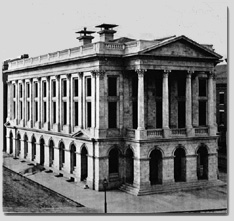
The History of Portland, Maine: From Machigonne to the Forest City
Portland, Maine was first settled by the English in 1633 as a fishing village called Casco, later renamed Falmouth, and finally Portland in 1786. It served as Maine's first state capital from 1820 to 1831, was largely destroyed in the Great Fire of 1866, and rebuilt into the city seen today — a history of repeated destruction and recovery captured in its phoenix seal and the motto Resurgam.Here is the full story.
Machigonne: Before the English
Long before European settlement, the Portland peninsula was home to the Wabanaki people, who called it Machigonne — “great neck.” The land jutting into Casco Bay was a natural fishing and gathering place, and the Wabanaki presence shaped the region for generations before the first English settlers arrived.
Casco and Falmouth: The First Settlements (1633-1775)
English settlers George Cleeve and Richard Tucker established a permanent settlement on the peninsula in 1633, calling it Casco. When the Massachusetts Bay Colony took control of Casco Bay in 1658, the town was renamed Falmouth. These early years were turbulent: the settlement was raided and destroyed in 1676 during King Philip’s War, and again in 1690 by French and Indigenous forces. Each time, survivors rebuilt — the first chapters in Portland’s long pattern of destruction and recovery.
Burned in the Revolution (1775)
On October 18, 1775, in one of the American Revolution’s early acts of retaliation, the Royal Navy under Captain Henry Mowat bombarded and burned Falmouth to the ground. The destruction of the town — hundreds of buildings lost before winter — outraged the colonies and helped galvanize support for independence and the creation of a Continental Navy. Once again, Falmouth rose from the ashes.
Becoming Portland (1786)
In 1786, the citizens of the peninsula (then called Falmouth Neck) separated from the rest of Falmouth and incorporated as a new town, naming it Portland after the Isle of Portland off the coast of Dorset, England. The name would later travel west: Portland, Oregon was named after Portland, Maine, after a coin toss between two settlers, one from each city. Maine’s Portland grew quickly as a shipping and trading port through the late 1700s and early 1800s.
Maine’s First Capital (1820-1831)
When Maine separated from Massachusetts and became the 23rd state in 1820, Portland was chosen as its first capital. It held that role until 1831, when the capital was moved to the more central Augusta. Portland remained — and remains — Maine’s largest city and its economic and cultural center.
The Great Fire of 1866
Portland’s most famous disaster came on July 4, 1866, when a fire — likely sparked by Independence Day celebrations — swept through the city. It burned into the next morning, destroying more than 1,000 buildings, half the city’s churches, and hundreds of homes, and leaving much of the commercial district in ruins. It was, at the time, the largest urban fire in American history. Poet Henry Wadsworth Longfellow, returning to his home town, described it simply: “Desolation, desolation, desolation.” Yet true to its motto, Portland rebuilt rapidly — and much of the handsome brick-and-Victorian architecture that defines the Old Port and downtown today dates from that post-fire reconstruction.
Resurgam and the Phoenix
Having risen from destruction four times — the raids of 1676 and 1690, the British burning of 1775, and the Great Fire of 1866 — Portland adopted the motto Resurgam (“I will rise again”) and a city seal depicting a phoenix rising from flames. Few American cities have a motto so thoroughly earned.
Longfellow, King, and Portland’s Literary Legacy
Portland has an outsized literary history. Henry Wadsworth Longfellow, one of America’s most beloved 19th-century poets, was born in Portland in 1807 and grew up in the Wadsworth-Longfellow House on Congress Street — built in 1785 by his grandfather, Revolutionary War General Peleg Wadsworth, and now a museum open to visitors. More than a century later, horror master Stephen King was born in Portland in 1947. The city’s bookstores, its historical society, and its literary festivals carry that legacy forward today.
Modern Portland
From its rebuilt 19th-century core, Portland evolved through eras as a working waterfront, a railroad and shipping hub, and — in recent decades — a nationally celebrated food, arts, and cultural city, all while preserving the historic architecture that rose after 1866. The Old Port’s cobblestone streets and brick buildings, the working harbor, and the surrounding Victorian neighborhoods are living reminders of a city that has, again and again, risen again.
History of Portland, Maine: FAQ
When was Portland, Maine founded?
Portland was first permanently settled by the English in 1633 as a village called Casco. It was renamed Falmouth in 1658 and finally incorporated as Portland in 1786. The Wabanaki people, who called the peninsula Machigonne, lived there long before European settlement.
Why is Portland, Maine’s motto “Resurgam”?
Resurgam is Latin for “I will rise again,” and Portland’s seal shows a phoenix rising from ashes. The motto reflects the city’s recovery from four devastating destructions: raids in 1676 and 1690, the British burning of the town in 1775, and the Great Fire of 1866.
Was Portland the capital of Maine?
Yes. When Maine became a state in 1820, Portland was its first capital, serving until 1831, when the capital moved to the more centrally located Augusta. Portland remains Maine’s largest city.
Is Portland, Oregon named after Portland, Maine?
Yes. Portland, Oregon was named after Portland, Maine, reportedly decided by a coin toss between two founders — one from Portland, Maine and one from Boston. The Maine settler won, and the Oregon city took the Maine name.