
Downtown Bangor is a compact, walkable core of brick and granite buildings between the Kenduskeag Stream and the Penobscot River, much of it rebuilt after the Great Fire of 1911. Sources draw its edges differently, so here is where it is, how the fire shaped it, what to see, and where the sources disagree.
Downtown Bangor at a glance
- What it is: the Downtown Bangor Partnership calls it the city’s mixed-use historic core, with the largest concentration of commercial and residential activity north of Portland.
- Size on the ground: maine.com’s guide says the core is about eight blocks between the Kenduskeag Stream and the Penobscot River, roughly a 20-minute walk across, with West Market Square at the center.
- Main streets: shops and restaurants sit mainly on Main, Central, Hammond, Broad and Columbia streets, per maine.com. The waterfront is below and to the east, along Front and Railroad streets.
- The look: buildings of brick and granite, many from the rebuilding after 1911.
- Partnership office: 33 State Street, according to the Partnership’s site.
Where is downtown Bangor?
There is no single boundary. Here is how each source treats it:
- maine.com: about eight blocks between the Kenduskeag Stream and the Penobscot River, centered on West Market Square.
- The National Register historic district: about 24 acres, bounded by Harlow, Center, Park, State, York and Central streets, according to Wikipedia.
- The Partnership and the city: the Partnership’s homepage gives no written boundaries, and the city’s downtown district map is a development district plan that we could not open.
The historic district is centered on the area rebuilt after the fire, which Wikipedia says was about half of Bangor’s commercial core.
The 1911 fire and the rebuild
According to Wikipedia’s article on the fire, a small fire started on the afternoon of April 30, 1911 in a downtown shed on Broad Street. Strong winds carried it across downtown and into the Center Street Hill neighborhood, and it was brought under control on the morning of May 1. It destroyed 285 homes, about 100 businesses and six churches, along with the post office, the custom house, three high school buildings and the Bangor Public Library, which held about 70,000 volumes. Two people died, and damage was about $3.2 million.
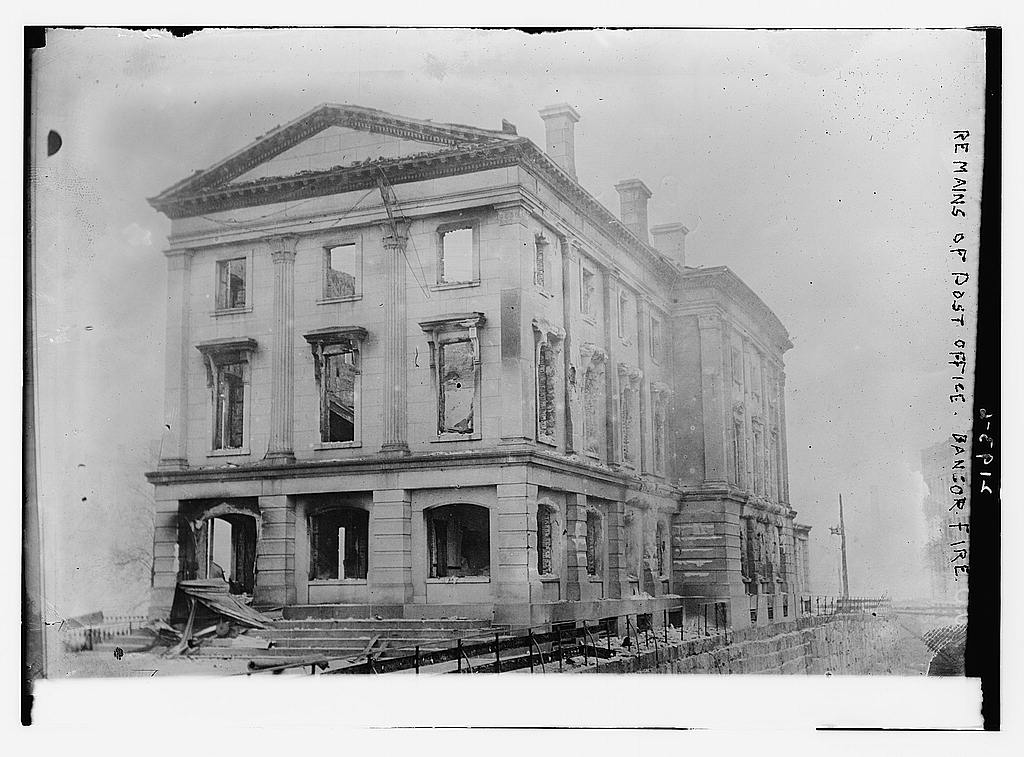
The city formed a planning committee and hired Boston landscape architect Warren Manning, whose plans called for wider streets, sites for public buildings and the Kenduskeag and Norumbega malls, according to the New England Historical Society. Rebuilding took about five years and added 48 buildings, nearly all brick, and three parks. Boston and New York firms including Peabody and Stearns and Carrere and Hastings worked alongside local architects Wilfred Mansur, C. Parker Crowell and Victor Hodgins. The architectural historian Gregory Clancy, quoted in that article, called the rebuilt core Maine’s first fully 20th-century urban space.
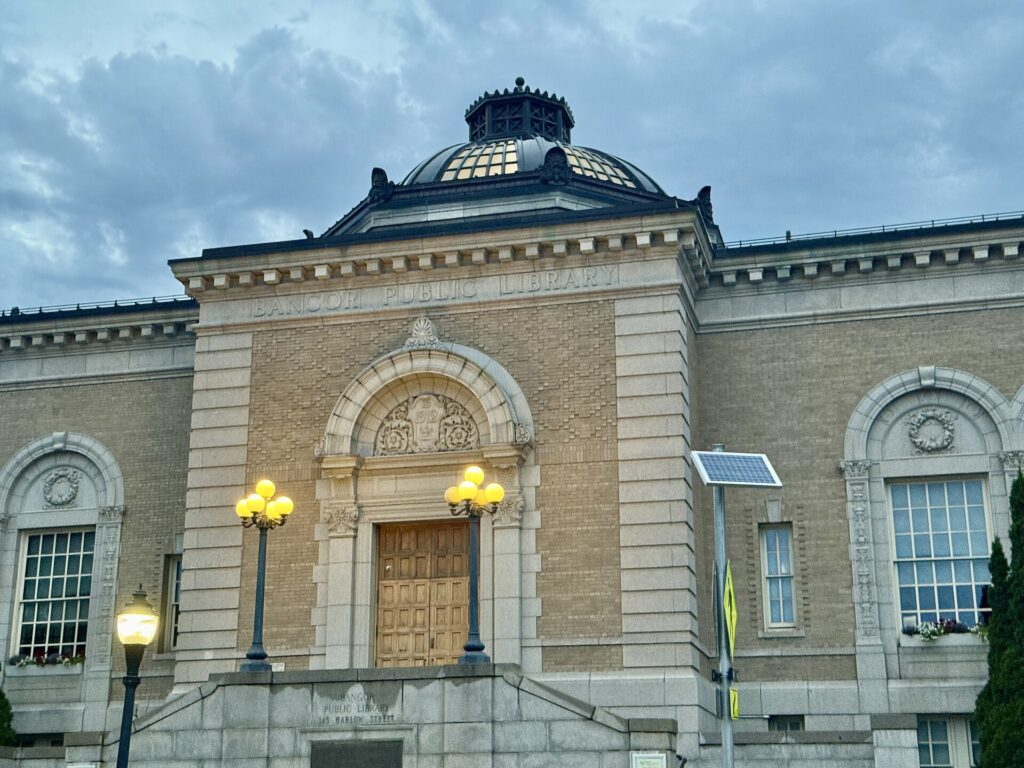
The Great Fire of 1911 Historic District was listed on the National Register of Historic Places on June 14, 1984, with a boundary increase approved January 4, 2023, per Wikipedia. It says most of the district’s buildings date from 1911 to 1915 and the main style is Renaissance Revival. Notable buildings include:
- Bangor Public Library (1912), by Peabody and Stearns.
- Morse Building (1914-1915), by Victor Hodgins, now a University of Maine art gallery.
- Bangor Post Office (1914-1915), now City Hall.
- Bangor Telephone Exchange (1931), described as the most prominent Art Deco building in Maine.
- Kenduskeag Mall (1912), designed by Warren H. Manning, with a bronze statue of Hannibal Hamlin.
What to see in downtown Bangor
- Zillman Art Museum (40 Harlow Street): The Maine Highlands says admission is free and that it is part of the Maine Art Museum Trail.
- Penobscot Theatre Company at the Bangor Opera House (131 Main Street): The Maine Highlands says the opera house was built in 1920, is the last of eight that once stood in Bangor, and was restored by the company after it acquired the building in 1997.
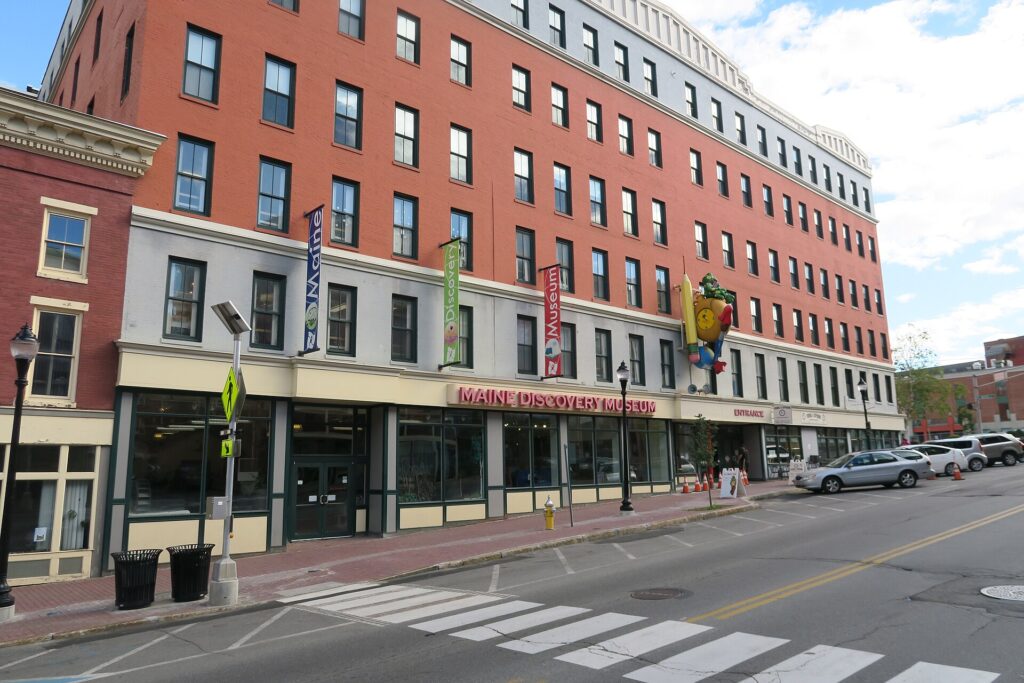
- Maine Discovery Museum (74 Main Street): a children’s museum, per maine.com.
- International Cryptozoology Museum: listed among downtown venues by the Partnership.
- Paul Bunyan statue (519 Main Street): a 31-foot fiberglass statue about a 15-minute walk south of West Market Square, per maine.com.
- The waterfront: once industrial and now a park and a large outdoor concert site, according to maine.com. The Partnership lists the Maine Savings Amphitheater and the Cross Insurance Center among downtown venues.
For shopping, The Maine Highlands names White Lobster Vintage, Red Rabbit Bazaar and Cool Girl Collective, and says to look for public art along its interactive art map. That guide was published in April 2025, so confirm shops are still open. For food, maine.com lists Bagel Central (33 Central Street), Sea Dog Brewing (26 Front Street), Paddy Murphys (26 Main Street), The Tarratine (81 Park Street) and Novio’s Bistro (130 Hammond Street).
The Partnership’s signature events include two Sidewalk Art Festivals, First Fridays Art Walks and the Downtown Countdown on New Year’s Eve. Check its site for dates.
Parking and getting around
maine.com says downtown has on-street spaces and garages with capacity, and calls parking easy compared with Portland. It says the core is flat except for the climbs to Thomas Hill and West Broadway, and that Bangor Airport is about five minutes from downtown. The Partnership’s site has Parking and Interactive Map pages that we could not open, so check them for current garages and rates.
Why the sources disagree
- Where downtown ends. maine.com’s eight blocks and the National Register district’s 24 acres are different shapes, and we could not read the city’s development district map to compare it.
- What the fire destroyed. Wikipedia lists 285 homes, about 100 businesses and six churches. The New England Historical Society says 267 buildings were destroyed and 75 families left homeless. Both give roughly $3.2 million in damage and two deaths.
- How many rebuilt buildings are listed. Wikipedia’s article on the district says 48 buildings and three parks, while its article on the fire says 43 rebuilt buildings were listed in 1984. The district’s 2023 boundary increase may account for some of the gap, but the sources do not say.
Downtown Bangor: FAQ
Where is downtown Bangor, Maine?
Between the Kenduskeag Stream and the Penobscot River, centered on West Market Square, according to maine.com. The historic district is bounded by Harlow, Center, Park, State, York and Central streets.
Is downtown Bangor walkable?
Yes. maine.com describes a core of about eight blocks, roughly a 20-minute walk across, and says it is flat apart from the climbs to Thomas Hill and West Broadway.
What happened in the Great Fire of 1911?
A fire that started on April 30, 1911 destroyed much of downtown, including the library, post office and custom house, before it was contained on May 1. Downtown was rebuilt in about five years.
Is downtown Bangor a historic district?
The Great Fire of 1911 Historic District was listed on the National Register of Historic Places on June 14, 1984, with a boundary increase approved in 2023.
Where is the Paul Bunyan statue in Bangor?
At 519 Main Street, about a 15-minute walk south of West Market Square, according to maine.com. It is a 31-foot fiberglass statue.
Is Stephen King’s house downtown?
No. maine.com says it is on West Broadway, a residential street, and is not a museum or tour site. See our Stephen King’s Bangor guide.
Our details come from the Downtown Bangor Partnership, maine.com, The Maine Highlands, Wikipedia (the fire and the historic district), the New England Historical Society and the City of Bangor’s downtown district map. Shops, events and parking change, so confirm before you go.