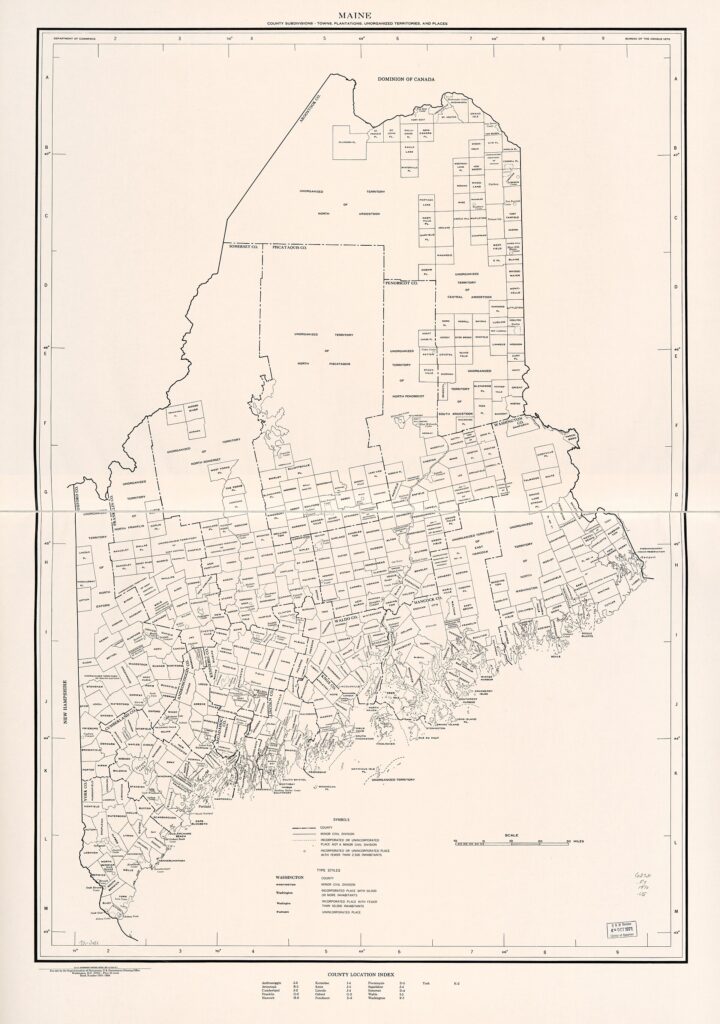
Maine’s unorganized territory is the part of the state with no local, incorporated municipal government, and it covers slightly more than half of Maine’s land area. About 9,000 people live there year round. The Maine Legislature acts as its local governing body, the state assesses its property taxes, counties provide most services, and the Land Use Planning Commission handles zoning and permits. Sources disagree on how many townships it has (429 or 435), so below we show where each number comes from.
Maine’s Unorganized Territory at a Glance
- What it is: the area of Maine with no local, incorporated municipal government, per the Maine State Auditor and Maine Revenue Services.
- How big: slightly more than half of Maine’s land area. The Land Use Planning Commission (LUPC) puts the area it covers at more than 10.4 million acres.
- Who lives there: about 9,000 people year round, and many more seasonally.
- How many townships: 429 plus coastal islands (Maine Revenue Services and the State Auditor), or 435 (Wikipedia). See below.
- Who governs it: the Maine Legislature, which reviews and approves the budgets of the state agencies and counties that provide services.
- Who plans and zones it: the Land Use Planning Commission.
- Who taxes it: the Property Tax Division of Maine Revenue Services.
What Is an Unorganized Territory?
In most of Maine, a city or town runs local services and sets its own rules. The unorganized territory has no such government. According to the Maine State Auditor, it is “the area of Maine having no local, incorporated municipal government.” Most of it is heavily forested land in the north, east and west, and it includes some coastal islands, parts of Downeast Maine and the area around Baxter State Park. Many places in it are known only by survey names such as T 19 MD or T 6 R1 NBPP, not by town names.
Who Runs It?
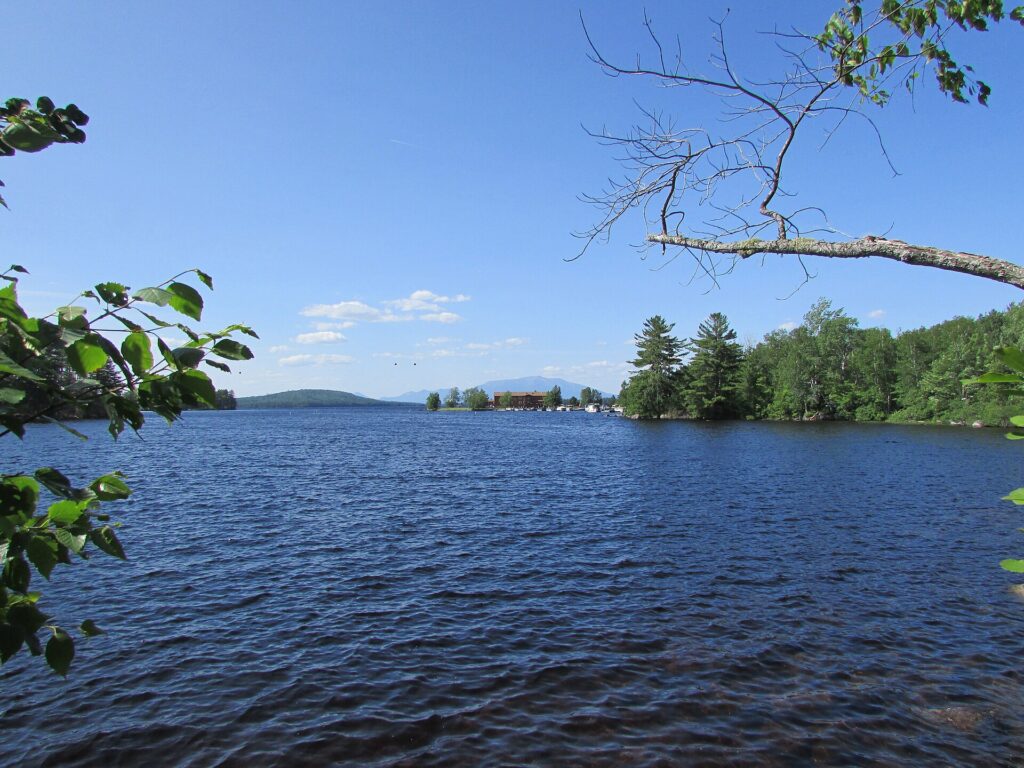
The Legislature is the local governing body. Maine Revenue Services and the State Auditor both say the Legislature reviews and approves, each year, the budgets of the state agencies and county governments that provide services there. The State Auditor’s Fiscal Administrator reviews those budgets and expenditures and publishes an annual financial report.
Services are shared between the state and the counties. Washington County, for example, lists these services provided by its Office of Unorganized Territories: upkeep of roads and bridges, snow removal, garbage removal, fire protection, ambulance service, animal control, cemetery upkeep, polling places, shellfish conservation, E-911 and soil and water protection. The Maine Department of Education coordinates school assignments, and Wikipedia lists three state-operated schools there: Connor Consolidated School, Edmunds Consolidated School and Kingman Elementary School.
Taxes
The Property Tax Division of Maine Revenue Services assesses and collects property taxes in the unorganized territory, acting much like a municipal assessor. Its page says it maintains more than 700 tax maps, 23,769 real estate tax accounts and 814 personal property accounts. The State Auditor says the Fiscal Administrator submits the annual Municipal Cost Components legislation so that taxes can be levied. We did not find a single rate to quote, so see Maine Revenue Services’ unorganized territory tax rates page for current figures, and our Maine property tax rates by town page for comparison with organized towns.
Zoning and Building: The LUPC
The Land Use Planning Commission is the planning and zoning authority for Maine’s unorganized and deorganized areas, including townships and plantations. It issues permits for everything from home construction and camp renovations to large commercial projects. Before 2012 it was the Land Use Regulation Commission.
- Permit volume: Mainebiz reported 503 completed residential permit applications in 2020, up from 398 in 2019, with the previous high at 438 in 2017. That is dated, but it shows the trend.
- Who builds: Mainebiz said more than three-quarters of new dwelling permits came from Maine residents.
- Staff: the LUPC had 21 staff across six regional offices in 2021, and its director said enforcement had been stretched.
- Adjacency rule: the LUPC revised it in 2019. It applies to subdivisions and doesn’t apply to individual single-family homes, per Mainebiz.
- Outbuildings: from the end of January 2025, owners building new barns, sheds, garages or other outbuildings must notify the state through a self-verification form. Accessory structures typically don’t need permits, but the article we read doesn’t define the standards or penalties.
Check with the LUPC before building anything, because we are describing news reports and not the current rules.
Plantations Are Not Unorganized Territory
A plantation is a form of local government found only in Maine, and it sits between unorganized territory and a town. A guidance document from Monhegan Plantation says plantations use an annual meeting and three assessors, can’t adopt a charter, and have limited ordinance power covering animal control, consumer fireworks, trash on private property and traditional foodways. Plantations fall under the LUPC for land use, unless they adopt a comprehensive plan the LUPC approves. The same document says Highland Plantation returned to LUPC jurisdiction effective September 2, 2025, after repealing its plan. Plantations are unrelated to Southern plantations.
Can You Live in the Unorganized Territory?
Yes, about 9,000 people do. Land ownership, camps and homes there work as they do elsewhere in Maine, but there is no town office. Taxes come from the state, many services come from the county and the LUPC handles permits. For the land side, see our cheap land in Maine and recreational land and snowmobile trails guides.
Why the Sources Disagree
- 429 or 435 townships: Maine Revenue Services and the State Auditor say 429 townships, including the Baxter State Park area, plus many coastal islands. Wikipedia describes 435 townships plus deorganized municipalities and islands. We couldn’t find a source that reconciles them.
- Plantations: the Monhegan Plantation guidance counted 29 plantations in 2023. A radio station article says 34 but lists only 31 names.
- Washington County: its own page says 34 territories in one place and 35 in another, and it lists 34.
- Area: sources give “slightly more than half of Maine’s land area” and “over half.” The LUPC’s 10.4 million acres is the one hard figure.
- Population: about 9,000 year round, though Wikipedia’s county table sums to a somewhat different total.
Frequently Asked Questions
What is an unorganized territory in Maine?
It is an area with no local, incorporated municipal government. The state and county governments provide services instead.
How much of Maine is unorganized territory?
Slightly more than half of Maine’s land area, according to Maine Revenue Services. The LUPC puts its jurisdiction at more than 10.4 million acres.
How many people live in Maine’s unorganized territory?
About 9,000 year round, and many more seasonally.
How many unorganized townships does Maine have?
Maine Revenue Services and the State Auditor say 429. Wikipedia says 435.
Who governs the unorganized territory?
The Maine Legislature acts as its local governing body. The Land Use Planning Commission handles planning and zoning.
Do you pay property taxes in the unorganized territory?
Yes. The Property Tax Division of Maine Revenue Services assesses and collects them.
Who plows the roads in the unorganized territory?
Counties provide snow removal and road upkeep in many places, according to Washington County. Arrangements vary, so check with the county.
What is the difference between a plantation and an unorganized territory?
A plantation has its own local government with limited powers, while an unorganized territory has none. Plantations still fall under the LUPC for land use unless they adopt an approved plan.
Do you need a permit to build in the unorganized territory?
Often, yes. The LUPC issues permits for homes and camps, and accessory structures typically don’t need permits but require a notification form. Check with the LUPC.
Our details come from Maine Revenue Services, the Maine State Auditor, Wikipedia, the Land Use Planning Commission, Washington County, Mainebiz, Maine Environmental News and a Monhegan Plantation guidance document. They disagree on several counts, so we give each. Rules, rates and counts change, so confirm them with the agency involved.
Keep Reading
- Recreational Land and Snowmobile Trails: how access works on private land
- Cheap Land in Maine: what land costs and where
- Maine Property Tax Rates by Town: compare mill rates
- Smallest Towns in Maine: the tiniest places